
WHAT OUR CLIENTS SAY
Practice Areas
- Airline Accidents
- Alabama Car Accident Lawyer
- Alabama Nursing Home Injuries
- Alabama Workers Compensation Attorneys
- Alabama Wrongful Death Attorneys
- Ambulance Accidents
- Amputation Injuries
- Amusement Park Injuries
- Athens Alabama Pedestrian Accident Lawyer
- Athens Alabama Pedestrian Accident Lawyer
- Auto Accident Attorney
- Back-Up Accidents
- Bar Accidents
- Bed Bug Injury
- Bicycle Accidents
- Boating Accidents
- Brain Injuries
- Broken Bone Injuries
- Burn Injuries
- Bus Accidents
- Car Accident Questions and Answers
- Cell Phone Accident
- Child Injuries
- Construction / Bridge Accidents
- Construction Zone Accidents
- Cullman Pedestrian Accident Lawyer
- Dangerous Road Accidents
- Decatur Alabama Pedestrian Accident Lawyer
- Decatur Auto Accident Attorney
- Delivery Truck Accidents
- Distracted Driving Accident
- Dog Bites
- Drunk Driver Accidents
- Elderly Driver Accidents
- Electrocution Accidents
- Elevator and Escalator Accidents
- Emergency Vehicle Accidents
- Failure to Yield Accidents
- Fire and Explosion Attorneys
- Food Poisoning
- Guntersville Pedestrian Accident Lawyer
- Head-On Collision
- Highway Accidents
- Hit and Run
- Hospital Falls
- Hot Air Balloon Accidents
- House Fires
- Huntsville Auto Accident Attorney
- Huntsville Car Accident Lawyer
- Huntsville Pedestrian Accident Lawyer
- Industrial Accident Lawyers Near Me
- Insurance Claims
- Intersection Accidents
- Left Turn Accidents
- Lyft Accident
- Madison AL Pedestrian Accident Lawyer | Ferguson & Ferguson
- Motorcycle Accidents
- Moulton Pedestrian Accident Lawyers
- Multi Car Accident
- Passenger Claims
- Pedestrian Accident Lawyers
- Personal Injury Chronology
- Personal Injury FAQ
- Personal Injury Glossary
- Personal Injury Statute of Limitations
- Personal Injury What Can We Do
- PFAS Injury Lawyer | Forever Chemical Cancer Lawsuits
- Pharmacy Malpractice
- Premises Liability
- Product Liability
- Rear End Collision
- Rental Car Accident
- Rollover Accidents
- Scottsboro Alabama Pedestrian Accident Lawyer
- Side Impact Collisions
- Slip and Fall
- Smart Car Accidents
- Spinal Cord Injuries
- Swimming Pool Accidents
- T-Bone Accidents
- Taxi Accident
- Teen Accidents
- Texting While Driving Accidents
- Tow Truck Accidents
- Train Accidents
- Truck Accidents
- Uber Accident
- Uninsured Motorist
- Wrong-Way Accidents
BEST TRUCK ACCIDENT LAWYER NEAR ME
Huntsville Truck Accident Lawyer
We can help you in Madison, Morgan, Lawrence, and Limestone Counties and the surrounding areas.
While many attorneys claim to handle truck accident cases, Randy W. Ferguson dedicates more than 75% of his practice to handling truck accident and commercial vehicle cases. You must hire a truck accident lawyer who can win your case. If you are searching for a truck accident lawyer by googling “truck accident lawyer near me Huntsville” or “best truck accident lawyer near me Huntsville,” we are who you are searching for to handle your case. We have been handling truck accident cases for 35 years.
From the first day you hire your trucking accident attorney, there are steps he or she should take and questions that need to be asked. If you were in a Madison County semi-truck crash or if you were injured in Huntsville or any other city or state, we are the attorneys (abogados) you need to contact if you or a loved one has been seriously injured or killed in a delivery truck, dump truck, or tractor-trailer accident. We are here to help. We offer obligation-free consultations to all truck accident victims. Call 256-534-3435 or 256-350-7200. We are here to help.
Trucking is a big business, and dump trucks, delivery trucks, and semi truck accidents happen way more than they have to in this country. Huntsville, Alabama, truck accident lawyer Randy Ferguson understands that highway safety is an issue of great concern to most Alabamians. Semi-trailer and eighteen-wheeler accidents present unique issues not necessarily associated with a typical motor vehicle accident. Birmingham, Cullman, Decatur, and Huntsville, Alabama, all have interstates that carry thousands of eighteen-wheelers a day down their roads. Some of the busiest interstates in this country run through Atlanta, Georgia, Nashville, Tennessee, and Birmingham, Alabama. When a tractor-trailer truck is involved in an accident, there is a greater likelihood of serious injuries or deaths due to size disparities between trucks and cars and the basic laws of physics.
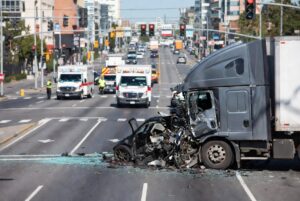
When should you hire a truck accident attorney?
If you or a loved one has been injured in a truck or tractor-trailer accident, numerous people and entities could be liable for your injuries. If you have been injured in a Huntsville 18-wheeler wreck or you need a Decatur truck accident lawyer, we can find the liable party responsible for your injuries. Those may include any of the following:
- Truck Driver
- Truck Company or Owner
- Manufacturers of the Trucks
- Truck Part Manufacturers
- Maintenance Companies
- Shipping Company
- Cargo Loading Company
- Brokers
- Lessors
- Governmental Entities: State
- Road Maintenance or Contractors
- Motor Vehicle Drivers
- Bars or Taverns
In addition to identifying the potential parties liable for the injuries sustained in a truck accident, it is crucial to act promptly in seeking legal representation. When you or your loved one are recovering in the hospital, there is a risk that the trucking company may attempt to conceal evidence of liability on the part of the driver or the company itself. By contacting a truck accident lawyer without delay, you can ensure that vital evidence is secured before it is altered, cleaned up, or destroyed. Given the complexity of these cases and the possibility of multiple parties sharing liability, your attorney will work diligently to uncover all responsible parties and pursue accountability on your behalf.
Huntsville Truck Accident Information
There are more than 10,000 truck accident cases in Alabama each year. Every year, hundreds of Alabama residents, along with thousands of Americans, are injured or lose their lives in accidents involving tractor-trailers, semis, 18-wheelers, big rigs, and other large commercial vehicles. In 2017, 4,657 fatal crashes involving large trucks occurred in the United States. For the past 30 years, fatigued driving has been, and will continue to be, the number one safety issue in the commercial motor vehicle industry. A typical fully loaded large commercial truck can weigh 80,000 pounds or more, while an average passenger automobile weighs approximately 3,000 pounds. Because of this size disparity and due to the basic laws of physics, any trucking collision between a commercial truck and another vehicle is likely to result in serious, even fatal, injuries. While statistics show that truck drivers are generally much more careful on the road than automobile drivers, and thankfully, the incidence of fatal crashes involving trucks and other large vehicles has declined in recent years, large truck crashes still accounted for 5350 fatalities and 133,000 injuries in 2001. That’s why you need a semi-truck accident lawyer in Huntsville, AL, to handle your case.
Common Causes in North Alabama
Thousands are injured each year in truck accidents in Alabama. The Federal Motor Carrier Safety Administration (FMCSA) ranks the most common factors involved in truck accidents. There are various causes of truck crashes, including
- Driver fatigue: Driver fatigue causes 18 percent of trucking accidents, or almost one in five.
- Sleep-deprived and drowsy truckers: Many eighteen-wheeler accidents are caused by sleepy truck drivers. That is why the law requires them to only drive a certain amount of time per day.
- Overloaded or unsafe trucks: When a truck’s load exceeds state and federal weight limits, the truck driver and all other motor vehicles on the highway face the risk of an accident.
- Speeding: Almost 1/3 of all fatal car crashes in the U.S. are caused by excessive speeding.
- Weather and road conditions: fog, ice, floods, snow, and heavy winds create driving hazards and limit visibility for safe driving.
- Driver distractions: Some common distractions are passengers, cell phones, satellite radio, hands-free devices, and outside distractions.
- Drunk Driving: Truck accidents are sometimes caused by drunk drivers. Blood alcohol concentration levels are lower for commercial drivers, meaning that truckers may not test at or above. 04 BAC, or about half as much as the legal ’08 limit in Alabama. In these cases, you can also pursue bar owners, restaurants, liquor stores, or others who served a truck driver alcohol.
- Failure to Yield to Pedestrians: When a big rig or semi driver is negligent and hits a pedestrian, the seriously injured party or their survivors often have a case against the driver and his trucking insurance. Truck drivers must watch for pedestrians and bicyclists on or near roadways. While these types of accidents can happen to adults or children, children are at particular risk due to their tendency to run into roads without looking.
- Failure to yield: Alabama truck drivers approaching traffic lights and yield signs must yield the right-of-way to other motor vehicles, bicyclists, and pedestrians. Failure to yield is a common cause of truck accidents in Alabama. Any commercial truck driver in Alabama who fails to yield the right-of-way is typically considered at fault.
- Running red lights and stop signs: The two most common reasons drivers run stop signs are impatience or inattention. Drivers who run stop signs cause approximately 70,000 accidents each year. In roughly one-third of these accidents, someone is seriously injured.
- Driving too fast for conditions: Driving too fast for conditions does not only include speeding. Truck drivers in Alabama often drive too fast for road conditions, which can lead to accidents. Driving too fast for conditions accounts for about 23% of all truck accidents, leading to over 30,000 trucking accidents each year.
- Failure to stay in lane: The failure to keep your commercial vehicle within the marked lanes is one of the most common causes of truck accidents. All drivers are required to operate their vehicles within the marked and painted lane lines. Further, if you change lanes, you must use your turn signals.
- Failure to train drivers: There are a lot of unqualified truck drivers on the road. Commercial truck drivers need training both in the classroom and on the road. When a truck driver’s negligence is the result of improper training, an injured individual can sue the trucking company for not training or not knowing the driver was untrained.
- Prescription drug use: Truck drivers often fail to tell their employers that they are taking prescription medicines that could impact their ability to drive. Many prescription drugs that people take for depression, sleeplessness, anxiety, and chronic conditions such as obesity, diabetes, and autoimmune issues can affect an individual’s driving ability.
- Unfamiliarity with roadways: One of the most common causes of truck crashes in Alabama is unfamiliarity with local roads. Road construction and improvements often surprise unsuspecting truck drivers.
- Failure to watch for motorcycles: Many motorcycle accidents are caused by truck drivers who do not see the motorcycle before changing lanes.
- Following to close: Truck drivers tailgating other motor vehicles is a common cause of truck accidents in Alabama and Tennessee. Depending on size and speed, a car may be able to stop within 2 to 4 seconds. Stopping an 80,000-pound tractor-trailer can take almost twice as long.
- Improper passing: Improper passing or turning by truck drivers in Alabama and Tennessee can result in serious injuries or death. Improper passing can be changing lanes without signaling, not yielding the right of way, passing another vehicle in a no-passing zone, or checking blind spots.
- Reckless driving: Reckless driving can be speeding, failing to yield the right of way, cutting off other drivers, tailgating, weaving in and out of traffic, passing other cars and trucks aggressively, and many other dangerous practices.
- Wrong-way driving: An overwhelming number of wrong-way collisions are related to the use of alcohol, drugs, and unfamiliar roads. Inadequate or confusing signage also causes many wrong-way accidents.
- Texting and driving: Big-rig collisions and injuries are often caused by truck drivers or motorists texting and driving. Truck drivers are subject to the Federal Motor Carrier Safety Act (FMCSA) and are not supposed to be using cell phones while operating a truck. The FMCSA is a federal law that prohibits truckers from using cell phones while they are driving. Texting while driving is permissible for drivers of commercial motor vehicles when necessary to communicate with law enforcement officials or other emergency services.
- Defective vehicle parts and maintenance: A study conducted by the Federal Motor Carrier Safety Administration (FMCSA) cited vehicle failure as a factor in 33.1 percent of two-vehicle crashes involving a heavy truck and a passenger vehicle and 29.4 percent of all truck accidents. Both federal and state laws regulate the maintenance of commercial vehicles. Common types of equipment failures or defects include tire blowouts, steering failure, brake failure, defective lights, brake failure, defective straps, and defective trailer hitches.
- Hazardous road conditions and debris: dangerous road conditions can include burned-out streetlights, malfunctioning traffic lights, faded lines on the roadway, missing and inadequate road signs, potholes, untrimmed foliage obscuring signage, narrow roads without shoulders, steep drop-offs at shoulders, overly steep roads, and too-narrow or sharp curves and items dropped on the road.
- Construction zones: Construction zones can be hazardous for truckers. The speed limit is lower, and traffic can stop quickly and back up. When commercial trucks—big rigs, semis, 18-wheelers, or tractor-trailers—are on a timeline to deliver their loads, this can cause the perfect storm.
- Shoulder drop-offs: A shoulder or pavement drop-off refers to a defect where the elevation changes between the lane and shoulder or between two travel lanes. These types of edge drop-offs are often caused by water, poor maintenance, or defective construction.
- Rollovers: Most rollover accidents in Alabama and Tennessee are caused by driver errors. The main causes are speeding, distracted driving, driver fatigue, impaired driving, unsecured loads, improperly or overloaded loads, and worn tires.
- Improper loading: When a load shifts or falls off the vehicle because it was improperly loaded, people get injured. Improper cargo loading accounts for hundreds of serious truck accidents each year. The Federal Motor Carrier Safety Administration (FMCSA) publishes a guide on loading cargo for truck drivers. The Cargo Securement Rules by the FMCSA have been adapted based on the North American Cargo Securement Standard Model Regulations and have been in place since January 2004.
- Jackknife accidents: A semi-tractor trailer has three braking systems. One braking system controls the steering axle, one controls the cab’s drive wheels, and the third controls the wheels of the trailer. Many truck accidents involve a jackknifed tractor-trailer, where the tractor loses control of the trailer and it swings out, forming a “V” or “L” shape. Usually, this happens when the drive wheels lock and the other wheels keep moving forward, causing the trailer to swing around so that it’s at an angle with the tractor/cab.
- Underride accidents: Underride accidents happen when a passenger vehicle gets crushed under the rear or side of a tractor-trailer. Most of these accidents are not survivable. An estimated 423 people die in underride accidents with large trucks each year.
- Tire blowouts: Tire blowouts happen when a weakened tire is subjected to sudden pressure or impact that causes the tire to burst or rapidly lose air pressure. Often caused by potholes, underinflation, overloading, wear, and heat,
- Driving beyond their allowed Hours of Service: Truck drivers are federally mandated to limit the amount of time they operate their trucks on any given day or week for safety reasons. Under the FMCSA hours of service regulations, truck drivers may drive no more than 11 hours at a time after 10 consecutive off-duty hours
- Driving without the proper license: Drivers of large trucks, such as 18-wheelers, and other commercial vehicles must follow the state statutes and case law on commercial drivers’ licensing. Truck drivers must have a commercial driver’s license (CDL) to operate a commercial truck.
- Operating oversized trucks on narrow roads: Driving large commercial vehicles on narrow roads and bridges can cause serious accidents.
- Failure to see other vehicles due to the truck’s large blind spot: Because of the size of an eighteen-wheeler, they have much bigger blind spots than other vehicles on the road.
Differences Between Truck and Car Accidents
There are numerous differences between a car accident and a truck accident. The biggest differences are as follows:
- Much bigger insurance policies. Insurance: $750,000.00 minimum.
- Federal Motor Carrier Safety Administration regulations must be followed.
- More serious injuries and deaths.
- Much more property damage to motor vehicles.
- Trucking adjusters come to the scene of the accident immediately.
- Longer hospital stays and more medical bills.
- There are more deaths per accident in trucking cases.
- Requires better-trained and experienced trucking attorneys.
- Often requires accident reconstruction experts.
- More expensive cases to pursue.
Federal CMV Restrictions
Commercial motor operators that drive big trucks have restrictions for trucks carrying property cargo limited to maximum hours driven, minimum hours off duty, and required rest after the 60/70-hour driving limit, meaning a driver may not drive after 60/70 hours on duty in 7/8 consecutive days. A driver may restart a 7/8 consecutive-day period after taking 34 or more consecutive hours off duty. Commercial motor vehicle drivers that are carrying people have more stringent restrictions. The United States Department of Transportation, 49 C.F.R. Part 387, Subpart A, assures insurance coverage in an amount equivalent to the minimum levels of financial responsibility outlined in those regulations.
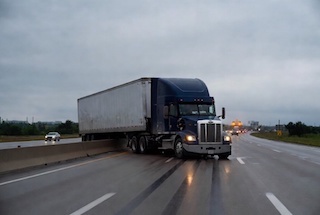
How to Stay Safe From Eighteen Wheelers on the Road
If you find yourself beside or behind a big truck, always do the following:
- Leave enough room between you and the truck. Underride accidents can happen if you follow too close to the truck.
- If you can’t see their mirrors, they can’t see you. Do not stay in the blind spot of an eighteen-wheeler.
- Trucks can weigh up to 80,000 pounds. That means they will take a lot longer to stop than a normal motor vehicle. Do not jump in front of a truck and expect it to be able to stop. You will get the bad end of the deal, not them.
- Trucks make wide right turns. Do not pass a truck making a wide right turn, or you will get hit. You will also be at fault for the accident. Being alive is more important than being late.
Types of Trucking Companies
Many different types of trucking companies must follow the Federal Motor Carrier Safety Administration (FMCSA) regulations. Some of the companies include the following:
- Walmart/Sams
- Target
- UPS Trucks
- Fed-Ex Trucks
- USPS Trucks
- Logging Trucks
- All Delivery Trucks
- Garbage Trucks
- Car/Transport Trucks
- Delivery Trucks
- Dump Trucks
- Fuel Trucks
- Construction/Dump Trucks
- Concrete Trucks
- Coal Trucks
- Moving Vans
- Steel Trucks
- Tanker Trucks
- Tow Trucks
- All eighteen-wheelers
Who is at fault in a trucking accident?
When you or a loved one has been injured in a truck or tractor-trailer accident, numerous people and entities could be liable for your injuries. Those include the following:
- Truck driver
- Truck company or owner
- Manufacturers of the trucks
- Truck part manufacturers
- Maintenance companies
- Shipping company
- Cargo loading company
- Brokers
- Lessors
- Governmental entities: State
- Road maintenance or contractors
- Motor vehicle drivers
- Bars or taverns
In Alabama, liability for a truck crash can involve various individuals and entities beyond just the truck driver. Trucking companies, as per federal law, hold responsibility for the actions of their employee drivers. Truck owners and manufacturers are accountable for ensuring the safe condition of the equipment, including the truck and its parts.
Potential parties that could be considered liable for a truck crash in Alabama include truck drivers, trucking companies, owners and lessors of trucks and trailers, cargo loaders, and manufacturers of the truck and its components, as well as companies responsible for truck maintenance and repair. It is common for responsibility in truck accidents to be shared among multiple parties, making it a complex aspect when dealing with such incidents. Seeking assistance from a qualified truck accident attorney can be crucial due to this complexity.
Dangerous Roads in Alabama
Truck accidents can occur anywhere, including parking lots, on the highway, or even in your driveway. That’s why you need an 18-wheeler accident lawyer in North Alabama. The most dangerous roads in Alabama include the following:
- Beltline Road in Decatur, Alabama;
- Highway 431;
- 6th Avenue in Decatur, Alabama;
- Interstate 85;
- Interstate 20;
- I-565;
- Interstate 65;
- University and the Parkway Huntsville;
Truck Accident Statistics
Nearly 580,000 active motor carriers who own or rent at least one tractor were registered with the FMCSA as of June 2025. Small companies dominate the market: 91.5% run 10 or fewer trucks, and 99.3% run fewer than 100. 5,218 heavy trucks were involved in fatal collisions in 2024 (down 3% from 2023 but up 30% over the previous ten years). Large-truck crashes claimed 5,340 lives in 2024 (a 2.5% decrease from 2023). The majority of victims were passengers in other cars.
Every year, nearly half a million large truck accidents occur in the United States. And because of the size and weight of these vehicles, accidents involving trucks are often much more dangerous or fatal than a typical car accident. Local intersection stats are often worse than the national truck accident stats. Most trucking accidents in Alabama take place on the interstate, but more fatalities take place on state highways. Only four percent of all injuries sustained in motor vehicle accidents are caused by large trucks, but 86 percent of fatalities and 77 percent of those injured are the drivers and passengers of the car involved in the crash. According to ALDOT, the primary causes of truck accidents in Alabama include the following:
- Improper Lane Usage: 1,104 (12.4 percent)
- Failure to Yield Right of Way: 847 (9.5 percent)
- Unseen Object, Person, or Vehicle: 817 (9.2 percent)
- Tailgating: 692 (7.7 percent)
- Misjudged Stopping Distance: 504 (5.6 percent)
- Defective Equipment: 399 (4.5 percent)
- Improper Backing: 360 (4.0 percent)
- Improper Turning: 322 (3.6 percent)
- Avoiding Animals, Objects, or Persons: 322 (3.6 percent)
- Crossed Median/Centerline: 272 (3.0 percent)
- Failure to Heed Sign/Signal: 233 (2.6 percent)
- Fatigued/Asleep: 200 (2.2 percent)
- Driving too Fast for Conditions: 176 (2.0 percent)
- Improper Passing: 173 (1.9 percent)
- Ran Off-Road: 157 (1.8 percent)
- Driving Under the Influence: 111 (1.2 percent)
- Over the Speed Limit: 86 (1.0 percent)
- Unknown causes: 448 (5.0)
- Other causes: 1,714 (19.2)
The most recent statistics show that 333,000 large truck wrecks occurred in the U.S. in one year. These accidents killed 3,921 people and injured another 104,000. Every year in Alabama, the causes of truck accidents remain the same, but the percentages change slightly on a year-to-year basis. In many cases, there are two or more causes of truck accidents.
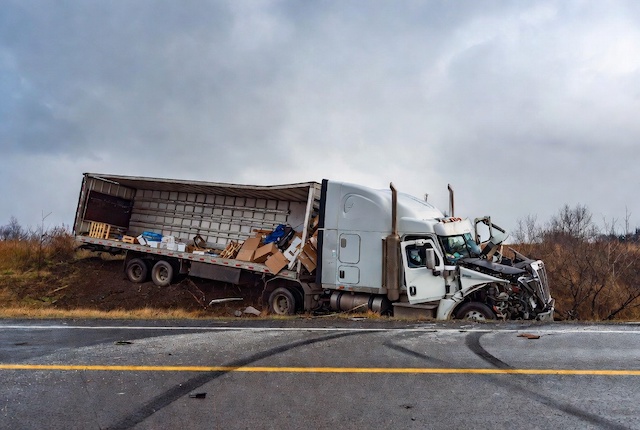
What to do After A Truck Accident
After an eighteen-wheeler accident, you are often confused and unsure of what to say or do. Always remain at the scene until you can speak with the other party involved if you can. Never admit you were at fault, and do the following:
- Immediately file an accident report with the police, sheriff, or state trooper if the agency has not done so at the scene.
- Write down the name, address, insurance information, vehicle license number, and driver’s license number of any persons involved in the car accident. Record the names, addresses, and telephone numbers of all witnesses.
- Obtain photographs of the accident scene, all vehicles involved (before repairing), and any visible injuries to the parties involved, such as cuts, bruises, and scars.
- If you have a dashcam installed by a company like BlackBoxMyCar, recover any footage that documents the accident.
- Do not discuss the accident or your injuries with anyone, except your doctor and your attorney.
- Do not consent to a recorded statement or sign any document without first reviewing it with your attorney. Innocent statements made by you attempting to assist an insurance adjuster can easily be misinterpreted and used to deny or minimize your recovery.
- Immediately seek medical attention and tell your doctor the nature and extent of your pain and injury and how the injury occurred.
- Track your expenses. If your car is written off in an accident, you may have to fork out a lot for a new car, so looking for a used car dealer may be your best option.
A strong claim clearly outlines the financial impact of your accident. Keep records of your:
- All medical bills, including doctor’s visits, surgery and therapy,
- Future medical bills, including long-term care,
- mileage driven to all medical providers,
- rental car expenses,
- time away from work,
- and any other expenses your accident has caused.
Insurance Company Tactics After a Truck Accident
Insurance companies will do anything to keep you from paying them the true value of your case. They may do things like:
- They will tape-record you to get you to say something to hurt your case.
- They will lie about witnesses.
- They will tell you you are contributorily negligent (1%).
- They will offer you lowball settlements.
- They will lie about insurance coverage.
- Pressure you into taking a small settlement.
- Delaying any settlement to get you to take less money.
- They will hire a team of lawyers and accident reconstruction experts.
- They will do extensive discovery to drag out the case.
What is the truck’s black box?
The “black box” contains information about the truck at the time of the crash, from the truck’s speed to the tire pressure to whether the brakes were applied before the accident. It is important to know what the driver did and did not do before the accident. You also know the condition of the truck at the time of the crash. The National Highway Traffic Safety Association (NHTSA) requires that all commercial trucks record and report certain information. A “black box” usually contains the Electronic Control Modules (ECM), Event Data Recorders (EDR), and Electronic Logging Devices (ELD). These devices preserve technical vehicle data and driver information about the truck and the driver.
Electronic Control Modules
All modern semi trucks contain ECMs, which track, control, and monitor the basic operations that allow a truck to safely transport cargo. ECMs record information about fuel efficiency, airbag systems, engine performance, and mechanical problems. EMCs also conduct diagnostic tests and notify truck drivers of any issues by illuminating various dashboard warning lights.
Electronic Logging Devices
ELDs enable commercial truck drivers to easily track their hours of service (HOS) to ensure they comply with the Federal Motor Carrier Safety Administration’s (FMCSA) driving limits. All ELDs are required to display a trucker’s daily number of driving hours. They record and distinguish between the times when a truck is parked, idling, or in motion by automatically syncing with the truck’s engine. Finally, ELDs require that before truckers begin a driving segment, they must indicate whether their status is “on-duty,” “not driving,” or “off-duty.”
Event Data Recorders
EDRs record certain information if the truck crashes or has a different type of accident. EDR’s recording function is triggered by a rapid and unnatural change in a truck’s velocity, such as when a tractor-trailer operator breaks suddenly or collides with an object that causes the truck’s airbag to deploy. EDRs preserve information about the truck and truck driver in the seconds before, during, and after the collision. EDR’s record includes the following:
- Truck’s speed before and upon impact
- Vehicle’s precise GPS location
- Seat belt
- Steering angle
- Breaks
- Engine RPM
- Speed
- Airbag
- Tire pressure
- Cruise control
- Throttle
- Communications
- Monthly and daily activity
Who should you sue after a truck accident in Huntsville, AL
1. What are the risks associated with truck accidents that make truck drivers and their employers common parties to sue in such cases?
The risks of serious accidents and injuries are higher in truck accidents due to the size and weight of commercial trucks. This elevated risk factor makes truck drivers and their employers, such as trucking companies, common parties to sue in these cases, as they are often involved in commercial transportation that poses inherent risks.
2. Can other drivers on the road be held responsible for contributing to truck accidents and be sued for damages?
Yes, besides truck drivers and their employers, other drivers on the road who contribute to truck accidents can also be held liable and sued for damages. It is not solely the responsibility of the truck driver and their company in these cases.
3. Are trucking companies liable for accidents caused by their drivers, even if they were not directly involved in the accident?
Yes, in many cases, injured parties can sue the trucking company that employed the negligent driver, even if the company was not directly involved in the accident. Trucking companies can be held responsible for the actions of their employees in certain situations.
4. What is the insurance coverage carried by truck drivers, and how does it affect liability in truck accidents?
Truck drivers are required to carry insurance, often with higher coverage limits compared to regular drivers due to the increased risks associated with professional driving. This insurance plays a significant role in determining liability in truck accidents.
What are the most common semi-accident injuries?
More than half of all accidents in Alabama result in an injury to the driver or his or her passengers. If you or a loved one sustained injuries in a truck accident in Alabama, you and your loved ones have a right to be compensated for your injuries. Many of the injuries we see in trucking cases include the following:
- Burn injuries
- Catastrophic injuries
- Broken bones
- Lacerations
- Bruising
- Whiplash
- Concussion
- Eye injury
- Seatbelt injuries
- Chest injury
- Degloving injury
- Spinal cord injury
- Traumatic brain injury
- Amputation
- Paralysis
- Wrongful death
- Soft tissue injuries
- Hip injuries
- Shoulder injuries
- Strained ligaments
- Back muscle sprains
- Scrapes and Cuts
- Bruising
- Contusions
- Broken ribs
- Internal injuries
- Jaw injuries
- Loss of teeth
- Neck injuries
- Crushed larynx
- Crushed trachea
- Broken neck
- Pelvic injuries
- Penetration injuries
Damages You Can Recover In A Truck Accident
An individual who negligently operates a motor vehicle may be liable for a wide variety of damages that an accident can cause, including but not limited to the following:
- Disability and Disfigurement
- Loss of Consortium
- Medical Bills
- Lost Wages
- Mental and Emotional Distress
- Out-of-pocket expenses
- Pain and Suffering
- Property Damage
- Surgery and other medical treatment costs
- Rehabilitation fees and procedures
- Nursing home care costs
- Disfigurement and permanent scarring
- Loss of enjoyment of life
In the aftermath of an 18-wheeler wreck that was not your fault, various forms of compensation may be sought to address the losses you have incurred. These potential compensations include coverage for medical expenses resulting from injuries sustained in the accident, compensation for pain and suffering endured as a consequence of the crash, and support for any physical impairments that may have been caused by the collision.
Moreover, financial restitution may encompass both present and future earnings that have been compromised due to the accident. Compensation for loss of consortium, which pertains to the deprivation of the benefits derived from a family relationship, and loss of quality of life, which addresses diminished enjoyment and fulfillment, are also among the types of compensation that can be pursued.
Additionally, seeking recompense for property damage caused by the 18-wheeler wreck is a valid avenue. It is essential to recognize that pursuing compensation for one’s losses in such incidents is not an act of greed but rather a justified endeavor, as truckers are mandated by law to ensure the safety of their surroundings. If truckers or their employers fail to uphold this duty, the law dictates that they are responsible for covering the losses they have instigated.
How Much Money Can I recover?
The amount of money you can recover in a truck accident depends on several different factors, including the following:
- Cost of your medical treatment
- Wages you lost because of the accident
- Pain and suffering
- Scarring and disfigurement
- Emotional suffering
- Loss of consortium
- Insurance of the liable party
- Your own uninsured/underinsured insurance
- Subrogation
If you’ve been injured, an experienced trucking accident attorney can help you receive fair compensation for your injuries, including lost wages, hospital bills, pain, suffering, and damages for loss of companionship, love, and comfort. If you have a wrongful death claim, we can recover only punitive damages in Alabama, but we may also recover for loss of earnings, medical and funeral bills, and your family’s pain and suffering, as well as the loss of love, guidance, and support in other states.
How Long Do You Have to File a Truck Accident Claim in Alabama?
In Alabama, there is a general two-year statute of limitations. This means that you have two years from the date of the truck accident to file a lawsuit, or your case is gone forever. The statute is different if you are a minor. Even if you think the deadline to file your case might have passed, there may be other ways to extend the deadline. Talk to an attorney as soon as you can to preserve your claim.
Why Hire Trucking Accident Lawyer Randy W. Ferguson
Randy W. Ferguson, an Alabama truck accident attorney based in Huntsville, offers comprehensive legal services for those who have been seriously injured or killed in a truck accident. With over 32 years of experience representing truck injury victims, Randy is well-versed in both state and federal trucking laws and regulations. His firm provides free, no-obligation consultations to truck accident victims and their families, ensuring they have the opportunity to seek legal guidance without financial burden. Additionally, Randy’s commitment to her clients is unwavering, as he works tirelessly to help them navigate the complexities of their cases and secure the compensation they rightfully deserve for their injuries and losses. For those in need of legal assistance following a truck accident, Randy W. Ferguson can be reached at 256-534-3435. The law offices of Ferguson and Ferguson take pride in giving each client individual and personal attention.
- We are committed to excellent client service. </li
- We have handled hundreds of truck accidents.
- We will not assign your case to another attorney.
- We care about our clients and have patience.
- We review all onboard cameras
- We interview witnesses
- We hire accident reconstruction experts
- Review log books
- Obtain driver drug tests and employee files
- Obtain data from the truck’s Electronic Control Module (ECM, i.e., “black box”)
- We identified the party responsible for your injuries.
- We obtain your medical records and bills.
- We can help with financial assistance.
- We will help you get the necessary medical treatment.
- We get your bills paid, reduced, and/or eliminated.
- Free phone consultations are available 24/7.
- Free office consultations are available as late as 7 p.m. and on Saturdays.
- There are two locations near you.
- We answer all our client’s calls or return them promptly.
- We make sure that our clients understand each step of their case.
- We have great compassion for the physical, emotional, and financial problems that our clients suffer, and we will do everything possible to get them through their difficult times.
Trucking companies and automobile insurance companies have teams of lawyers, claims adjusters, and almost unlimited resources to fight injury claims. Their job is to deny, delay, and defend against your truck or car accident claim. Our Huntsville, Alabama, truck accident attorneys have the knowledge, experience, and resources to take on large corporations and insurance companies. If you retain our trucking accident firm, we will do everything ethically and legally possible to recover the money you deserve to compensate you for your damages and losses. When an eighteen-wheeler or trucking tragedy has struck you or your loved ones, you need a nationally known trucking accident attorney who knows the rules and knows how to get the most for your claim. The investigation and legal issues in truck wreck cases are often complex. It is vitally important to quickly hire a qualified Alabama trial lawyer who can act fast to collect evidence of the trucking company’s negligence. At the Alabama trucking law firm of Ferguson & Ferguson, our extensive experience in handling semi-tractor-trailer crashes means that we know what to look for when conducting an investigation and what is fair compensation for your injuries.
Frequently Asked Questions
These are some of our most frequently asked questions:
What does it take to be a truck driver in Alabama?
To operate a semi-truck legally and competently, individuals must obtain a Commercial Driver’s License (CDL). Achieving a CDL involves completing rigorous training that teaches the necessary skills and knowledge to handle such large vehicles. Candidates for a CDL must successfully pass both written and practical examinations and must be at least 21 years of age.
Once licensed, semi-truck drivers are obliged to carry out consistent maintenance checks to ensure vehicle safety and performance. Regular tasks include changing the oil, rotating the tires, and conducting tune-ups to address any wear or mechanical issues. Additionally, drivers must perform daily inspections before each trip. These pre-trip checks focus on critical areas such as the engine’s condition, brake systems, tire integrity, and other vital components. It is mandatory for drivers to report any detected problems immediately and arrange for necessary repairs to maintain the truck in optimal working condition. This routine ensures both the safety of the driver and the efficiency of the vehicle, ultimately safeguarding the cargo and other road users.
What role does truck maintenance play in semi-truck safety?
Truck maintenance is crucial in ensuring that semi-truck drivers can perform their roles safely and efficiently. For drivers of semi-trucks, maintaining their vehicle is not just about operational efficiency; it’s a critical component of road safety. Firstly, possessing a Commercial Driver’s License (CDL) necessitates a sound understanding of truck mechanics, a requirement underscored during the rigorous testing process for obtaining the license.
To contribute to both the longevity of the vehicle and the safety of all road users, semi-truck drivers engage in regular and comprehensive maintenance checks. Routine procedures such as oil changes, tire rotations, and various vehicle tune-ups are instrumental in keeping the truck in prime condition. Moreover, daily pre-trip inspections are mandated, during which drivers must examine key elements like the engine and brakes and verify the integrity of the tires and other essential truck components. These inspections help identify potential problems early, ensuring that any issues are addressed promptly to avoid accidents or breakdowns.
Thus, diligent adherence to maintenance schedules and thorough daily inspections play a pivotal role in minimizing the risk of accidents, reducing downtime due to repairs, and ensuring the efficient handling of cargo. Ultimately, truck maintenance safeguards not just the cargo and the driver, but also everyone on the road.
Does distracted driving play a role in semi-truck accidents?
Distracted driving is a significant contributor to accidents among semi-truck drivers. Research indicates that nearly 29% of semi-truck accidents are due to the driver losing control of the vehicle, with an additional 22% resulting from rear-end collisions. Recognizing this risk, the Federal Motor Carrier Safety Administration (FMCSA) implemented a rule in 2012 that bans the use of handheld cell phones by truck drivers on interstate highways. Although the FMCSA allows the use of hands-free devices, it emphasizes that these should not divert the driver’s attention from the road. It is crucial for truck drivers to remain vigilant and constantly monitor their environment to prevent these kinds of accidents.
Are there any safety matters to deal with truck drivers using illegal drugs?
In the transportation industry, various safety measures, including pre-employment drug testing, are implemented to mitigate the risk of substance abuse among semi-truck drivers. However, despite these precautions, challenges such as the high demand for drivers over the availability of qualified candidates can sometimes lead to oversight, allowing individuals with prior substance abuse issues to operate vehicles.
In 2018, a report by the National Highway Traffic Safety Administration (NHTSA) revealed that 6% of large truck operators involved in deadly accidents were found to have drugs in their system. This statistic underscores the significant issue of drug use among semi-truck drivers, which poses a critical risk to road safety. The reasons for such high levels of substance abuse in this group stem largely from the demanding nature of their work. Semi-truck drivers face extensive, often repetitive, periods behind the wheel, which can lead to fatigue and boredom. To combat these feelings and to manage the long hours required to meet tight delivery schedules, drivers might turn to stimulants to remain alert or to depressants to ease the stress. Furthermore, the isolation from family and the constant pressure of job responsibilities contribute to psychological and emotional strains that some drivers might attempt to alleviate through the use of drugs. Addressing these challenges is essential to prevent substance abuse and ensure the safety of not only the truck drivers but also other road users.
What can truck drives do to stay safe on the road?
To ensure safety and alertness on the road, tractor-trailer drivers can adopt several key practices to avoid accidents effectively:
1. **Manage Fatigue:** Long driving hours can lead to significant fatigue, impacting a driver’s reaction time and awareness. It is crucial for drivers to get adequate rest before embarking on long trips. A regular sleeping schedule and quality sleep are essential. During trips, taking breaks every few hours to briefly exercise and breathe fresh air can help maintain alertness.
2. **Healthy Lifestyle Choices:** Maintaining a healthy diet and exercising regularly can greatly improve overall health and energy levels, thereby enhancing alertness while driving.
3. **Speed Management:** Given that tractor-trailers require a longer distance to come to a full stop, maintaining a speed that allows for safe braking is necessary. Observing speed limits and adjusting speed according to traffic, weather conditions, and road types can dramatically reduce the chances of accidents.
4. **Cargo Security:** Properly securing cargo is paramount, as unsecured or imbalanced loads can shift during transport, causing the vehicle to be unstable. Drivers should utilize appropriate securing tools such as chains, straps, and nets as prescribed by safety regulations. Regular inspections of the cargo, especially after each break, ensure that the load remains secure throughout the trip.
5. **Open Communication:** Drivers should never hesitate to communicate with their dispatch or manager if they feel too fatigued to drive safely. It is important to prioritize safety over schedules or delivery deadlines.
By implementing these strategies, tractor-trailer drivers can enhance their road safety, ensuring their well-being and that of other road users.
What are two causes of truck accidents in Alabama?
Speeding and improper cargo loading are two critical safety concerns for semi-truck drivers, both of which can lead to severe consequences on the road.
Starting with speeding, the nature of semi-trucks, which are significantly heavier and larger than passenger vehicles, inherently demands more stopping distance—up to 40% more compared to smaller vehicles. Thus, when a semi-truck driver exceeds the speed limit, their ability to stop safely in response to road conditions or traffic significantly diminishes, sharply increasing the likelihood of accidents. These high-speed collisions can be particularly catastrophic given the mass and momentum of 18-wheelers, escalating the risk of severe injuries or fatalities not just to the truck driver but also to other road users.
On the subject of improperly secured cargo, the risks are equally concerning. Cargo that is not adequately fastened can shift during transit, causing the semi-truck to become unstable and difficult to control. A shifting load can drastically affect the handling of the vehicle, increasing the potential for jackknifing, rollovers, and collisions. Furthermore, if the cargo detaches from the vehicle, it poses a direct threat to following or oncoming traffic, potentially triggering multi-vehicle accidents. The Federal Motor Carrier Safety Administration (FMCSA) has established stringent regulations requiring the use of various restraining devices and regular cargo inspections to mitigate these risks. However, compliance issues or oversight can still lead to cargo-related accidents, underscoring the importance of strict adherence to safety protocols.
In conclusion, both speeding and improper cargo loading can set the stage for serious road incidents involving semi-trucks. These behaviors not only compromise the safety of the truck driver but also endanger public safety, highlighting the need for vigilance and strict compliance with road safety regulations.
What steps should truck drivers take to make sure their cargo is secure?
To ensure that their cargo is securely fastened, truck drivers must adhere to specific regulations set by the Federal Motor Carrier Safety Administration (FMCSA). These measures include using various securing devices such as safety chains, straps, and nets to stabilize the load before beginning their journey. Furthermore, it’s mandatory for drivers to conduct thorough inspections of the cargo at each break or stop to check for any potential shifts or loosening, thereby minimizing the risk of accidents caused by unstable or shifting loads during transport.
How do speeding, fatigue, and unsecured cargo contribute to semi-truck accidents?
To prevent accidents related to fatigue, semi-truck drivers should be vigilant about the symptoms of tiredness and prioritize sufficient sleep. Regular physical activity and a nutritious diet also play critical roles in maintaining alertness. Drivers are advised to take scheduled breaks to refresh and, if feeling overly fatigued, to communicate openly and potentially defer driving until adequately rested. Regarding speeding, it’s essential for drivers to always be conscious of their speed, particularly because heavy trucks require much longer distances to stop compared to smaller vehicles. Strict adherence to speed limits and a cautious approach when navigating through traffic are essential measures to avoid accidents.
In the realm of trucking, the factors of fatigue, speeding, and improperly secured cargo loads each significantly heighten the risk of accidents:
1. **Fatigue:** Truckers often face exhaustive schedules that demand extended periods of driving, which can lead to fatigue. This state diminishes a driver’s alertness and reaction time, increasing the likelihood of veering out of the travel lane. Whether it’s drifting into another lane or off the road entirely, these incidents can be directly linked to the driver’s decreased capacity to focus and control the vehicle.
2. **Speeding:** The design of tractor-trailers requires extra distance for stopping, especially when compared to passenger vehicles. Speeding exacerbates this issue, reducing a driver’s ability to halt effectively in urgent situations. This failure to adjust speed promptly can result in catastrophic collisions, where the truck either rear-ends another vehicle or loses control altogether.
3. **Improperly Secured Cargo Load:** When the cargo on a truck isn’t secured adequately, it can shift during transport. This movement often affects the balance and stability of the truck, making it susceptible to rollovers or jackknife accidents. Furthermore, shifting cargo might fall off and create hazardous conditions for other road users, leading to multi-vehicle incidents.
Each of these factors underscores the critical need for adherence to safety guidelines and regulations among truck drivers to minimize the risks of accidents on the roads.
What safety regulations has the FMCSA implemented to prevent truck accidents in Alabama?
The Federal Motor Carrier Safety Administration (FMCSA), a division of the U.S. Department of Transportation, offers safety programs, regulations, and facts related to the prevention of commercial motor vehicle-related injuries and fatalities. To specifically address the risk associated with semi-truck accidents, the FMCSA has implemented a variety of targeted safety regulations. These include stringent requirements for driver hours of service to ensure adequate rest, comprehensive truck maintenance protocols to keep vehicles in safe operating condition, mandatory drug and alcohol testing for drivers to promote sober driving, and rigorous standards for truck brakes and lighting systems to enhance road safety. Despite the annual estimation of semi-trucks driving approximately 140 billion miles, these proactive measures are crucial. They serve not only to reduce the frequency of accidents but also to encourage a culture of safety among drivers, emphasizing the importance of vigilance and defensive driving in such a high-stakes environment.”
Do I need a lawyer after a truck accident?
In a truck accident case, you are dealing with a team of insurance trucking adjusters and attorneys. Their job is to pay you as little as possible. Contact an experienced truck accident lawyer who will give you a free consultation. A Decatur trucking accident lawyer can provide valuable assistance if you have been involved in a trucking accident. We have a thorough understanding of the laws and regulations surrounding trucking accidents, particularly in North Alabama. Here’s how a skilled lawyer can help you:
1. Identify crash factors: A lawyer will analyze the specific circumstances of your case to determine the factors that led to the accident. This could include driver negligence, improper vehicle maintenance, or other factors that contributed to the collision.
2. Establish liability: One of the key roles of a trucking accident lawyer is to prove the liability of the trucking company and the truck driver. They will investigate the accident thoroughly, collect evidence, and build a strong case to hold the responsible parties accountable for your injuries.
3. Preserve evidence: Preserving evidence is crucial in any legal case. Your lawyer will work diligently to gather and protect evidence, such as accident reports, witness statements, and any available video footage. This ensures that the necessary evidence is retained to support your claim.
4. Negotiate with insurance companies: Dealing with insurance companies can be daunting, especially when they may try to minimize your compensation. A skilled lawyer will handle all communication with the insurance companies on your behalf. They will negotiate for a fair settlement that covers your medical expenses, property damage, lost wages, pain and suffering, and other damages resulting from the accident.
5. Pursue a lawsuit if necessary: If a fair settlement cannot be reached through negotiation, your trucking accident lawyer will be prepared to take your case to court. They will represent your interests and fight for your rights before a judge and jury. By enlisting the help of a Decatur trucking accident lawyer, you can ensure that your legal rights are protected and maximize your chances of receiving the compensation you deserve for your injuries and damages.
Should I accept a settlement?
If you are injured, you should never accept a settlement from an insurance company before talking to an attorney. Insurance companies try to pay out as little money as possible in every case. An attorney can usually get you a much bigger settlement.
What injuries are most common from truck accidents?
People injured in truck accidents in Alabama often sustain serious and often deadly injuries. Other common injuries from truck wrecks can include neck injuries, herniated discs, broken bones, and brain injuries.
How much does a truck accident lawyer cost?
We never charge a fee upfront. We only get paid if we win your case. All consultations are free.
What should I do after my accident?
Call the police and make a report. Notify your insurance company. Take pictures of the accident scene and your injuries. Get medical treatment. Call our office.
What is contributory negligence?
Contributory negligence is defined as negligence on the part of the victim that proximately contributes to their injuries. If you are found to be guilty of contributory negligence, you cannot recover against the other party for your injuries.
What can I do to focus on healing from my injuries and getting back to my normal life after a truck accident?
Allow the dedicated truck accident attorneys at Ferguson & Ferguson to handle the legal process and seek the maximum financial recovery for you so you can concentrate on your recovery and returning to your regular routine.
How can experienced truck accident attorneys assist in seeking maximum financial recovery after a truck accident in Decatur?
Experienced truck accident attorneys can handle the heavy lifting in your claim, ensuring that you receive the compensation you deserve while you focus on healing from your injuries and returning to your normal life.
How can I hold the at-fault parties accountable for compensating me for my injuries and damages?
By working with dedicated and experienced truck accident attorneys who can handle the legal aspects of your claim and seek maximum financial recovery on your behalf.
Who should I contact after being hurt in a truck accident in Decatur?
Contact a truck accident attorney in Decatur to seek compensation from the at-fault parties for your injuries and damages.
Why might your truck accident have happened in Huntsville, AL?
A truck accident might have occurred in Huntsville, AL, due to a variety of factors. Driver negligence often plays a significant role in such incidents, with factors such as driver fatigue being a common issue within the trucking industry. Despite regulations mandating rest breaks for truck drivers, some may forego these breaks to meet tight delivery schedules, leading to potential accidents caused by drowsiness or falling asleep at the wheel. Additionally, equipment malfunctions can also contribute to accidents, such as failures in safety features like underride bars that prevent other vehicles from becoming trapped beneath a truck during a collision. Moreover, varying road conditions can pose challenges for truck drivers, requiring adjustments in driving behavior to ensure safety. Negligence towards adapting driving practices to road conditions, such as in wet or icy weather, can further escalate the risk of accidents occurring.
What other types of cases does Ferguson & Ferguson handle?
Apart from truck accidents, the law firm specializes in handling various types of cases, such as car accidents, personal injury, motorcycle accidents, slip and fall accidents, nursing home abuse and neglect, injuries to children, bad faith insurance, litigation, business and commercial disputes, and cases involving dangerous or defective products.
Who can be liable in a truck accident case?
In cases of truck accidents involving 18-wheelers, determining liability can involve various parties. When you are injured by a trucking company, it could be any of the following parties who are at fault: the truck’s driver, the owner of the truck or trailer, the person who leased the truck or trailer, the shipper or loader of cargo, the manufacturer of the truck or tires, the company that performed maintenance on the truck, the state or local government, a contractor who performed road maintenance, or the driver of an automobile. It’s important to note that in addition to these potential parties, negligence or liability in such incidents can also be established through violations of relevant federal regulations governing interstate commercial transportation by truck. These regulations, set by the Federal Motor Carrier Safety Administration, are specifically designed to prevent accidents involving 18-wheelers. Therefore, if a truck driver or any other party involved violates these regulations, it may result in actionable negligence or liability.
What should I do if someone from the trucking company calls me before I’ve picked a truck accident lawyer?
Do not agree to make a recorded statement for the trucking company or their insurance carrier. Never sign any forms sent to you by the trucking company or their insurance carrier. Never settle your case. Call now for a free consultation.
What should I do in the days following a truck accident?
What to do after a truck accident in Alabama. After a truck accident:
- Stay At the Scene Of the Collision
- Call 9-1-1 for emergency services.
- Check Other Vehicles For Injuries if Possible
- Take Photos, Capture Videos & Record Audio of Evidence
- Exchange Contact Info, insurance details, and driver’s license
- Don’t make any statements about the accident.
- Get a Copy of the Accident Report
- Have your vehicle’s damage inspected.
- Get medical treatment and keep track of all doctor’s visits and treatments. Keep copies of all Test Results, Medication Prescriptions, and any other relevant medical information
- Keep a list of all out-of-pocket expenses.
- Keep a Record of all missed work
- Do not talk to the insurance company.
- Stay off Social Media
- Call Ferguson & Ferguson
What should I do after a truck accident in Alabama?
Call 911, seek prompt medical care, and report the crash. If it is safe, photograph the vehicles, road, cargo, skid marks, and identifying information on the truck; obtain witness details; and preserve damaged property. Avoid giving a recorded statement or signing a release before understanding your rights.
How is a truck accident different from a typical car accident?
Truck crashes may involve more severe injuries, multiple businesses, commercial insurance, federal and state safety rules, electronic data, driver qualification files, maintenance records, and cargo documents. Important evidence may also be controlled by the trucking company or another commercial entity.
Who may be liable for an Alabama truck accident?
Depending on the facts, potentially responsible parties may include the truck driver, motor carrier, truck or trailer owner, cargo loader, shipper, broker, maintenance contractor, parts manufacturer, government entity, or another motorist. More than one party may share responsibility.
What types of commercial vehicles are involved in truck accident claims?
Claims may involve tractor-trailers, 18-wheelers, semi-trucks, delivery vehicles, dump trucks, tanker trucks, logging trucks, garbage trucks, construction trucks, moving vans, car carriers, concrete trucks, and other commercial vehicles.
What are common causes of truck accidents?
Possible causes include fatigue, distraction, impairment, speeding, unsafe lane changes, following too closely, poor training, hours-of-service violations, defective brakes or tires, inadequate maintenance, overloaded or unsecured cargo, unsafe hiring, and driving too fast for conditions.
Can a trucking company be responsible for a driver’s negligence?
Potentially. A motor carrier may face liability under applicable agency principles or for its own conduct, such as unsafe hiring, training, supervision, dispatch, inspection, or maintenance. The answer depends on the driver’s status, operating arrangement, evidence, and governing law.
Can a cargo-loading company be liable for a truck crash?
A cargo loader, shipper, carrier, or other entity may be responsible if improper loading, overloading, or inadequate securement contributed to shifting cargo, lost cargo, instability, or a rollover. Bills of lading, weight tickets, photographs, and loading records may be important.
What records should be preserved after a commercial-truck crash?
Potential evidence includes electronic logging-device data, engine-control or event data, dash-camera footage, dispatch messages, driver logs, qualification and training files, inspection and maintenance records, cargo documents, phone records, drug and alcohol testing, and surveillance video. Prompt preservation requests can be important.
What is a truck’s black box, and can it help a claim?
Commercial vehicles may contain electronic control modules or event data that record information such as speed, braking, throttle position, and other vehicle activity. The available data varies by vehicle and system, and qualified professionals may be needed to download and interpret it.
How do federal trucking regulations affect a claim?
Federal Motor Carrier Safety Regulations may address driver qualifications, hours of service, inspections, maintenance, cargo securement, alcohol and drug testing, and other safety matters. Which rules apply depends on the vehicle, carrier, cargo, route, and circumstances.
What are hours-of-service rules?
Hours-of-service rules limit driving and on-duty time and require qualifying rest periods for covered commercial drivers. The precise requirements and exceptions depend on the operation. Logs, electronic records, fuel receipts, toll data, and dispatch communications may help evaluate compliance.
Can defective truck parts or poor maintenance support a claim?
Possibly. Claims may involve brake failures, tire defects, steering problems, lighting failures, coupling systems, underride guards, or other components. Inspection, repair, recall, and maintenance records can help determine whether a defect or maintenance failure contributed.
What if the truck driver was an independent contractor?
Calling a driver an independent contractor does not automatically decide responsibility. Courts may examine control, ownership, leases, federal motor-carrier rules, dispatch practices, branding, payment arrangements, and the parties’ actual relationship.
Can I bring a wrongful-death claim after a fatal truck crash?
A personal representative may be able to pursue an Alabama wrongful-death claim when legally actionable conduct caused the death. Alabama wrongful-death law is distinctive, so the proper claimant, defendants, evidence, and filing deadline require careful review.
What compensation may be available after a truck accident?
Depending on the claim and evidence, damages may include medical expenses, lost income, reduced earning capacity, pain and suffering, disability, disfigurement, and property damage. Alabama wrongful-death damages and claims involving public entities follow different rules.
How does Alabama’s contributory-negligence rule affect a truck accident claim?
A defendant in an Alabama negligence case may argue that the injured person’s own negligence contributed to the crash. The rule and possible exceptions are highly fact-dependent, making careful investigation of vehicle data, road evidence, witnesses, and safety-rule compliance important.
What if a government vehicle or unsafe road contributed to the crash?
Claims involving a government-owned truck, public employee, defective roadway, or road-maintenance contractor may have special notice requirements, shorter deadlines, immunity issues, and damages limitations. Public involvement should be identified promptly.
How long do I have to file a truck accident claim in Alabama?
The deadline depends on the legal claim, defendant, injured person, and other facts. Wrongful-death claims, claims involving minors, and claims against government entities may follow different rules. Prompt review also helps preserve commercial records that might otherwise be lost.
Should I speak with the trucking company or its insurer?
You may provide basic identifying information, but you should not speculate about fault or the extent of your injuries. Before giving a recorded statement or signing a broad medical authorization, release, or settlement agreement, consider obtaining legal advice.
Which Ferguson & Ferguson offices handle truck accident inquiries?
Ferguson & Ferguson Attorneys at Law has offices at 303 Williams Avenue SW, Suite 321, Huntsville, Alabama 35801, telephone 256-534-3435, and 211 Oak Street NE, Decatur, Alabama 35601, telephone 256-350-7200. The firm offers obligation-free consultations for truck-accident inquiries.
Experienced Huntsville Truck Accident Attorneys
Why Choose Ferguson & Ferguson
Ferguson & Ferguson offers valuable assistance to individuals involved in truck accidents in Alabama by leveraging the extensive experience of their nationally recognized personal injury attorneys. We are adept at holding responsible parties accountable for their actions in such cases. With a focus on gathering all necessary evidence related to the accident, they can negotiate aggressively with trucking companies to secure fair compensation for their clients. Additionally, we provide vital guidance to ensure that clients do not inadvertently undermine their cases. The firm operates on a no-win, no-fee basis, meaning that pursuing a claim with them carries no financial risk. For those who have suffered injuries in a truck accident, Ferguson & Ferguson stands ready to help them explore the possibilities of obtaining the compensation they may rightfully deserve.
If you’ve been injured, an experienced Alabama trucking accident attorney can help you receive fair compensation for your injuries, including lost wages, hospital bills, pain, suffering, and damages for loss of companionship, love, and comfort. The Huntsville, Alabama, attorneys and staff at Ferguson & Ferguson will help you in the event you have been injured, no matter what the cause. We understand that personal injuries and deaths not only cause physical pain and suffering but also emotional and financial disaster through the loss of a steady paycheck, mounting medical bills, and tremendous stress placed upon injured individuals and their families. That is why it is always important to ensure you hire the right personal injury firm. If you are struggling to understand personal injury and are unsure about what law firm to hire, then you can read Personal Injury Law: What You Need to Know and Educate Yourself if You Want to Do a Little Bit of Research Yourself! However, if you do have any questions, then you can contact us, and we are more than happy to accommodate any queries that you may have! Our trucking accident attorneys assist clients in Decatur, Athens, Cullman, Huntsville, Birmingham, Atlanta, Nashville, and often throughout the United States in the pursuit of serious truck accident claims. If you or a loved one has been injured in a trucking accident, call now. Call 256-534-3435 or 256-350-7200.
Never a Fee Unless We Win
At Ferguson & Ferguson, all of our trucking cases are handled on a contingency fee arrangement, sometimes known as a no-win, no-fee arrangement. For all of our trucking clients, we offer a free attorney consultation, either over the phone, at our office, or in your home or hospital room. If we represent you, we will not charge any up-front retainers or fees. We advance all costs on your behalf, and we are only paid if and when a settlement or verdict is reached. In the event we represent you and are unable to recover a verdict or settlement, you will owe nothing. We represent victims of large truck accidents throughout the state of Alabama, including Huntsville, Birmingham, Montgomery, Mobile, Decatur, and Tuscaloosa. To contact the Alabama truck accident injury law firm of Ferguson & Ferguson, call us at 256-534-3435 or fill out our consultation request form, and an attorney will be happy to review your case. Our lawyers have more than 45 years of experience in trucking accident litigation and are available 24 hours a day, seven days a week, to discuss your potential case. Call now. Call 256-534-3435 or 256-350-7200.
Huntsville office location:
303 Williams Avenue SW
Suite 321
Huntsville, AL 35801
Decatur Office Location:
211 Oak Street, NE
Decatur, AL 35601
Truck Resources
- American Trucking Associations: The ATA serves as an advocate for the trucking industry, providing information and research on the trucking industry (including highway and truck driver safety).
- Commercial Vehicle Safety Alliance: an organization made up of industry representatives and safety officials from various governmental entities, offering research and suggestions to help standardize truck safety measures throughout North America.
- The Federal Motor Carrier Safety Administration, Division of the U.S. Department of Transportation, offers safety programs, regulations, and facts related to the prevention of commercial motor vehicle-related injuries and fatalities.
- Insurance Institute for Highway Safety / Highway Loss Data Institute: The “large trucks” section features fatality statistics, regulatory policies, safety ratings, and related safety information.
- National Safety Council: Safety on the Road: General Information about Defensive Driving, Focusing on the Road, and Other Safety Considerations for Motorists.