
WHAT OUR CLIENTS SAY
Practice Areas
- Airline Accidents
- Alabama Car Accident Lawyer
- Alabama Nursing Home Injuries
- Alabama Workers Compensation Attorneys
- Alabama Wrongful Death Attorneys
- Ambulance Accidents
- Amputation Injuries
- Amusement Park Injuries
- Athens Alabama Pedestrian Accident Lawyer
- Athens Alabama Pedestrian Accident Lawyer
- Auto Accident Attorney
- Back-Up Accidents
- Bar Accidents
- Bed Bug Injury
- Bicycle Accidents
- Boating Accidents
- Brain Injuries
- Broken Bone Injuries
- Burn Injuries
- Bus Accidents
- Car Accident Questions and Answers
- Cell Phone Accident
- Child Injuries
- Construction / Bridge Accidents
- Construction Zone Accidents
- Cullman Pedestrian Accident Lawyer
- Dangerous Road Accidents
- Decatur Alabama Pedestrian Accident Lawyer
- Decatur Auto Accident Attorney
- Delivery Truck Accidents
- Distracted Driving Accident
- Dog Bites
- Drunk Driver Accidents
- Elderly Driver Accidents
- Electrocution Accidents
- Elevator and Escalator Accidents
- Emergency Vehicle Accidents
- Failure to Yield Accidents
- Fire and Explosion Attorneys
- Food Poisoning
- Guntersville Pedestrian Accident Lawyer
- Head-On Collision
- Highway Accidents
- Hit and Run
- Hospital Falls
- Hot Air Balloon Accidents
- House Fires
- Huntsville Auto Accident Attorney
- Huntsville Car Accident Lawyer
- Huntsville Pedestrian Accident Lawyer
- Industrial Accident Lawyers Near Me
- Insurance Claims
- Intersection Accidents
- Left Turn Accidents
- Lyft Accident
- Madison AL Pedestrian Accident Lawyer | Ferguson & Ferguson
- Motorcycle Accidents
- Moulton Pedestrian Accident Lawyers
- Multi Car Accident
- Passenger Claims
- Pedestrian Accident Lawyers
- Personal Injury Chronology
- Personal Injury FAQ
- Personal Injury Glossary
- Personal Injury Statute of Limitations
- Personal Injury What Can We Do
- PFAS Injury Lawyer | Forever Chemical Cancer Lawsuits
- Pharmacy Malpractice
- Premises Liability
- Product Liability
- Rear End Collision
- Rental Car Accident
- Rollover Accidents
- Scottsboro Alabama Pedestrian Accident Lawyer
- Side Impact Collisions
- Slip and Fall
- Smart Car Accidents
- Spinal Cord Injuries
- Swimming Pool Accidents
- T-Bone Accidents
- Taxi Accident
- Teen Accidents
- Texting While Driving Accidents
- Tow Truck Accidents
- Train Accidents
- Truck Accidents
- Uber Accident
- Uninsured Motorist
- Wrong-Way Accidents
Huntsville Bicycle Accident Lawyer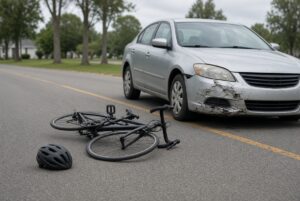
If you were hit while riding in Huntsville — on University Drive, Memorial Parkway, Research Park Boulevard, downtown, or a greenway — call Ferguson & Ferguson at 256-534-3435. We are a local firm with offices in Huntsville and Decatur. You speak with an attorney, not a call center. Consultations are free, 24/7.
Our firm has recovered over 75 million dollars for North Alabama injury victims, including serious roadway cases.
Alabama is one of only a few states that still uses pure contributory negligence. If an insurance company can pin even 1% of the blame on you, they will try to pay you nothing. That is why Huntsville bike cases turn on evidence, not hope.
Huntsville roads and routes where cyclists get hit
Huntsville is growing fast, and much of that growth sits on wide, high-speed corridors that were built for cars first.
Common crash locations we see and hear about in Madison County:
- University Drive — multiple lanes, 45 mph posted speed in stretches, heavy commercial traffic, and a documented history of serious pedestrian and bicycle crashes, including a fatal bicycle crash in the 2800 block in May 2026.
- Memorial Parkway (US-231) — high volume, frequent turning movements, and little protection for riders.
- Research Park Boulevard, Jordan Lane, and I-565 ramps — commuter speed, merge conflicts, and limited shoulder.
- Downtown Huntsville — one-way streets, parked cars (dooring), and drivers who do not expect a bike in the lane.
- Madison, Jones Valley, and South Huntsville connectors — mixed traffic and incomplete bike infrastructure.
Safer-feeling does not mean legally simple. Crashes also happen on:
- Aldridge Creek Greenway
- Big Spring Park / downtown connections
- Indian Creek and Tennessee River greenway approaches
- Monte Sano / Bankhead Parkway
- Club and weekend routes used by Spring City Cycling Club and HAMR riders
If your crash happened on a greenway, a path crossing, a construction zone, or a poorly maintained shoulder, other parties besides the driver may share liability — including a contractor or a governmental entity. Those claims have shorter notice deadlines. Call before you talk to anyone else.
Why Huntsville bike claims are different: Alabama contributory negligence
In most states, a cyclist who is 10% at fault still recovers 90%. Not here.
Alabama’s pure contributory negligence rule can bar your entire claim if you are found even slightly at fault. Insurers know this. After a Huntsville bicycle crash they often argue:
- You were not far enough to the right
- You were not visible enough
- You did not have required lights at night
- You rode two abreast
- You “should have seen” the car
- You were not in a bike lane (Huntsville still has many roads with none)
None of those arguments automatically ends the case. The other side has to prove your conduct actually caused the crash. Our job is to lock down photos, witness names, 911 audio, vehicle data, and any camera footage before it disappears — then stop the adjuster from rewriting the story.
Alabama’s 3-foot passing rule and how we use it
Drivers must give cyclists a safe distance when passing. Under Ala. Code § 32-5A-82, a safe distance means not less than three feet in the situations the statute covers, including roads with a marked bike lane and certain roads 45 mph or under.
A sideswipe, close pass, or “I didn’t see them” clip on University Drive or Memorial Parkway is often a passing-distance case. We look for:
- Dashcam / doorbell / business video
- Paint transfer and bike damage
- Witnesses who saw the car fail to move over
- Speed and lane position
Bicycles have the same rights and duties as vehicles on Alabama roadways (Ala. Code § 32-5A-260). You did not give those rights away by riding a bike in Huntsville.
Most bicycle accidents are caused by motorists who simply do not see the bicyclists when they are at intersections or in the traffic lane. Even though bicycles share the same responsibilities as automobiles, unfortunately, they are much easier to hit and result in greater, even catastrophic, injuries. Many cycling accidents occur in the bike lane, on crosswalks, and in the blind spots of other vehicles. If you or a loved one has been involved in a bicycle accident in Alabama, our bicycle accident attorneys are here to help. Our injury attorneys are for the people of Alabama when accidents occur. We are not trying to be America’s largest injury firm, our goal is to be the best firm for your case. We do not take millions of cases but limit our cases to provide the best representation possible. We understand and offer a FREE consultation 24 hours a day, 7 days a week. Call a local law firm at 256-534-3435.
If you have been struck while riding a bike, chances are that you have sustained severe injuries. If you are injured and go to the hospital, be sure to have documentation produced for you that will provide support for an accident injury claim if you are going to proceed with our lawyers regarding an accident settlement or lawsuit. Always cooperate with law enforcement officials if they request a statement at the scene or hospital, and obtain a copy of any police reports. This will assist your attorney in pursuing payment of your medical expenses and other damages.
What to do After an Alabama Bicycle Accident
If you have been in a bicycle crash, below is a list of things you need to do:
- Immediately file an accident report with the police, sheriff, or highway patrol if the agency has not done so at the scene.
- Do not leave the scene of the accident until the police have told you that you are free to go.
- Write down the name, address, insurance information, vehicle license number, and driver’s license number of any persons involved in the accident. Record the names, addresses, and telephone numbers of all witnesses.
- Obtain photographs of the accident scene, all vehicles involved (before repairing), and any visible injuries to the parties involved, such as cuts, bruises, and scars.
- Do not discuss the accident or your injuries with anyone except your doctor and your attorney.
- Do not consent to a recorded statement or sign any document without first reviewing it with your attorney. Innocent statements made by you attempting to assist an insurance adjuster can easily be misinterpreted and used to deny or minimize your recovery.
- Immediately seek medical attention and tell your doctor the nature and extent of your pain and injury and how the injury occurred.
- Don’t post medical updates about your recovery; don’t post any physical activities you may or may not be doing. Stay off social media.
- Keep all of the GPS, GoPro, and Strava data from that ride.
- Preserve your helmet, clothing, lights, GPS, Strava/Garmin, and any GoPro or phone video.
- Hire an experienced bicycle accident attorney, not a television or billboard attorney whom you will never meet.
- Track your expenses.
A strong claim clearly outlines the financial impact of your accident. Keep records of your:- medical bills,
- mileage driven to doctors’ appointments,
- rental bike expenses,
- time away from work,
- and any other expenses your accident has caused.
You have two years in most Alabama injury cases. Government claims can be much shorter. Do not wait.
Bike Accident Injuries
Although mandatory helmet laws and the use of other safety equipment such as lights, flashers, and proper clothing can reduce the chance of a bike crash, if one does occur, it usually results in significant personal injury. The most common injuries are:
- Concussions and closed-head injuries
- Fractures of arms, legs, and ribs
- Spinal injuries, including herniated discs
- Contusions, bruises, contusions, and severe abrasions, often called road rash
- Internal bleeding and injuries to vital organs
- Lacerations
- Eye injury
- Chest injury
- Degloving injury
- Amputation
- Paralysis
- Wrongful death
- Soft tissue injuries
- Hip injuries
- Shoulder injuries
- Strained ligaments
- Back muscle sprains
- Jaw injuries
- Loss of teeth
- Neck injuries
- Crushed larynx
- Crushed trachea
- Broken neck
- Pelvic injuries
- Penetration injuries
- Post-traumatic stress disorder (PTSD) and other mental health issues
In Huntsville, some of the most common bicycle-related injuries include cuts, scrapes, and contusions. These injuries are frequently seen among cyclists who ride in areas with rough terrain or without dedicated paths. Accidents involving motor vehicles and bicycles are also prevalent, often resulting in broken bones, head injuries, back injuries, and neck injuries. Head injuries are particularly concerning as they account for a significant percentage of long-term disabilities and fatalities from bicycle accidents in the city.
Who is liable for my bicycle accident in Alabama?
If you or a loved one is injured or killed in a bicycle accident, it’s important to maximize your recovery. The parties at fault could include:
- Driver of the motor vehicle;
- Commercial businesses (trucking companies, delivery companies, etc.) if the driver of the vehicle was on the clock;
- Governmental agencies or public entities;
- Road construction companies and contractors;
- Pedestrians
Alabama Bicycle Rider Obligations?
- Cyclists in Alabama must ride on the right side of the road.
- If a bike path is available, you should use the bike path.
- No more than two bicycle riders can ride alongside each other in the same lane.
- At night, a bike must have a white headlamp or light that can be seen from a distance of at least 500 feet and a red rear reflector that can be seen from 100 to 600 feet.
- Riders in Alabama under the age of sixteen must wear a bicycle helmet.
Common reasons for insurance injury denials in Alabama
- Injury unrelated to the accident: Make sure you receive medical treatment as soon as possible after an accident; otherwise, insurance companies may argue your injury is from an unrelated incident.
- Accident was your fault/contributory negligence: Insurance companies will work to show you were partially at fault for the accident.
- No coverage: The driver policy has been canceled, or the driver is not a covered driver.
- Insured not cooperating: The insured must cooperate with their insurance company by providing an accident report, giving statements, and responding to phone calls.
Bicycle Accident Statistics
The statistics and facts you should know about bicycle accidents include the following:
- In 2019, nearly 900 cyclists were killed in motor vehicle traffic crashes in the United States. Cyclist deaths accounted for 2.1 percent of all motor vehicle traffic fatalities.
- Bicyclist deaths occurred most often between 6 p.m. and 9 p.m.
- Bicyclist deaths occur most often in urban areas (75%) compared to rural areas (25%).
- Bicyclist deaths were 8 times higher for males than females in 2017.
- Alcohol was involved in 37% of all fatal bicycle crashes in 2017.
- Cyclist fatalities were highest in Florida (125), California (124), and Texas (59).
- The nation’s injuries from bicycling average 49,000 per year. On average, that costs the National Safety Council $4 billion a year.
- Over the past 10 years (2008–2017), the average age of pedal cyclists killed in motor vehicle crashes has increased from 41 to 47.
Important Things To Do When Biking In Alabama
When going for a ride, always remember the following:
- Ride a bike that fits you.
- Make sure your bike is in good mechanical order.
- Ride with a cell phone, personal identification, emergency contact, and something to write with.
- Wear bright clothing, a bike helmet, reflective gear, a white front light, a red rear light, and reflectors.
- Ride with both hands unless doing a turn signal
- Make sure the shoelaces are tightly tied.
- Know your route and do not make quick, jerky turns or lane changes.
- Carry all items in a backpack.
- Drive defensively.
- Be alert, and watch all drivers and their movements.
- Drive in the same direction as traffic.
- Obey all lights, signs, and hazards.
- Never text, talk, or take pictures with your phone.
- Do not wear headphones or sound-blocking equipment.
- Never use drugs or alcohol before or during a ride.
- Check your law to make sure sidewalk riding is legal.
- Watch for pedestrians.
- Pass pedestrians by annoyncing “on your left” or “passing on your left” or using a bell.
- Slow down and look for cars backing out of driveways or turning.
- Use bike lanes when it is safe to do so.
Bicycle Damages You Can Recover For In Alabama
Most vehicle-bicycle accidents are caused by the driver’s inattention. The Huntsville Law Office of Ferguson and Ferguson is an experienced bicycle accident law firm with a long track record of obtaining for clients the compensation and accountability they deserve. An individual who negligently operates a motor vehicle in Huntsville may be liable for a wide variety of damages that an accident can cause, including but not limited to the following:
- Disability and Disfigurement
- Loss of Consortium
- Medical Bills
- Prescriptions
- Future Medical Costs
- Lost Wages: If you have been injured in a bicycle accident, it’s important to understand the potential consequences. One of these consequences could be lost wages. This means that you may be unable to work and earn a living as a result of your injuries. It’s crucial to seek appropriate medical care and legal assistance to ensure that you receive the compensation you deserve for your injuries and any financial losses you have incurred.
- Loss of Earning Capacity
- Mental and Emotional Distress: In addition to the physical injuries that these safety measures aim to mitigate, it is important to acknowledge the emotional distress that can follow a bicycle accident. Victims may experience a spectrum of psychological effects, including, but not limited to, post-traumatic stress disorder-like symptoms such as flashbacks, persistent fear of cycling, heightened anxiety, and episodes of depression.
- Out-of-pocket expenses
- Pain and Suffering:
- Rehabilitative care
- Medical devices (crutches, wheelchairs)
- Bicycle repair or replacement value
- Loss of Enjoyment of Life
- Wrongful Death
A bicyclist’s actions play a significant role in determining their ability to seek monetary compensation for losses and injuries following an accident. Bicyclists must adhere to traffic laws just like any other driver. Negligent behavior or failing to follow the rules of the road can have serious consequences in the event of an accident. Alabama law operates on the principle of contributory negligence, where even minimal fault on the part of the injured party can bar them from recovering damages. This means that if a bicyclist is found to bear any responsibility for an accident, even as low as one percent, they may be prevented from pursuing compensation through a civil lawsuit. Understanding and abiding by traffic laws and safety regulations is crucial for bicyclists to protect their legal rights in the event of an accident.
What are some common types of bicycle accidents that happen in Huntsville, AL
1. What is a T-bone or broadside bicycle accident and when does it typically occur?
A T-bone or broadside bicycle accident happens when the front of a vehicle strikes the side of a bicycle, often occurring at traffic intersections.
2. What is a head-on bicycle crash and what are the potential consequences?
A head-on bicycle crash occurs when another vehicle hits the front tire of a bicycle, potentially resulting in fatal injuries for the bicyclist, especially if hit with significant force.
3. What is a rear-end collision in the context of bicycle accidents?
A rear-end collision involves the front of a vehicle hitting the back tire of a bicycle, often causing the cyclist to be dislodged from their bicycle and sustain injuries.
4. How do sideswipe collisions between vehicles and bicycles occur?
Sideswipe collisions occur when the side of a vehicle hits the side of a bicycle traveling in an adjacent traffic lane or designated bicycle lane.

Image by dae jeung kim from Pixabay
Causes of bicycle accidents in Alabama:
Bicycle accidents can be caused by any of the following:
- Car and Bike Driver negligence
- Automobile Drunk driving
- Car and Bike Drivers failing to yield
- Defective maintenance of bike paths
- Defective bicycle
- Left-turning vehicle at an Intersection
- Left-turning vehicle through a Gap in Traffic
- Right-Turning Vehicle Traveling Ahead of a Cyclist
- Right-turning vehicle overtaking a Cyclist
- Doored on the Driver’s Side
- Doored on the Passenger’s Side
- Rear-Ended by a Vehicle When Merging Across Lanes to Turn Left
- Side-swiped by a Passing Vehicle
- Rear-Ended by a Passing Vehicle
- Dog attack
- Potholes
- Malfunctioning Traffic Lights
- Improper Placement of Utility Poles or Trees near the Roadway
- Foliage: Obstructing stop signs or other signs
- Lack of a properly designed shoulder
- Improper design or placement of median barriers
- Improper lane width
- Improperly designed intersections
- Narrow bridge abutments
- Uncovered ditches, obstructions or poor drainage
- Construction site violations

Frequently Asked Bicycle Accident Questions
These are some of our most frequently asked questions:
How long does a person have to file a claim in Alabama?
The statute of limitations for filing a claim varies by state, typically ranging from one to six years. Alabama has a two-year statute of limitation.
Who is at fault in a bicycle accident in Alabama?
Alabama follows a strict contributory negligence standard. This means that if a bicyclist is found to be even 1% at fault for the accident, they may be barred from recovering any compensation for injuries or damages. Under Alabama law, bicyclists are granted the same rights and responsibilities as motor vehicle drivers. This includes obeying traffic signals, yielding the right-of-way when required, and riding on the right side of the road. Motorist must maintain a minimum of 3 feet of clearance when passing a bicyclist. Failure to do so can result in the driver being held liable if an accident occurs.
How do you get money from a bike accident?
To get money (compensation) from a bike accident, especially if you were injured or your property was damaged, you typically need to go through a legal or insurance claim process. Follow these steps:
1. Seek Immediate Medical Attention
Even if injuries seem minor, get checked by a doctor. Medical records are crucial for your claim.
2. Report the Accident
Call 911 to report the accident and get a police report.
Make sure the report includes all relevant details and witness statements.
3. Gather Evidence
Take photos of the scene, your injuries, and any property damage.
Get contact info from witnesses and the other party involved.
Keep all receipts and records related to medical treatment, bike repairs, and lost wages.
4. File an Insurance Claim
If a motor vehicle was involved, file a claim with the driver’s insurance.
You may also be able to file with your own auto or health insurance, depending on your coverage.
5. Contact Ferguson & Ferguson for Legal Help
A personal injury attorney can help you:
Draft a demand letter.
Negotiate with insurance companies.
File a lawsuit if necessary.
Many attorneys offer free consultations and work on a contingency fee basis (they only get paid if you win).
6. Know What You Can Claim
You may be entitled to compensation for:
Medical expenses (past and future)
Lost wages
Pain and suffering
Property damage (e.g., your bike)
Emotional distress
7. Be Cautious with Insurance Offers
Don’t accept the first settlement offer—it’s often lower than what you deserve.
Wait until you fully understand the extent of your injuries before settling.
If I wasn’t wearing a helmet during my accident, am I still entitled to compensation?
Yes, you can still recover.
What is the success rate of bicycle accident attorneys?
The success rate of bicycle accident attorneys can vary depending on the firm, the complexity of the case, and the jurisdiction. However, here are some general insights:
Law firms that specialize in bicycle accident cases tend to have high success rates, often resolving a significant majority of their cases in favor of their clients—either through settlements or court verdicts1.
Factors Influencing Success:
Experience with bicycle-specific laws and accident dynamics.
Track record of settlements and trial wins.
Resources for investigation and expert testimony.
Client communication and negotiation skills.
No Universal Percentage: There isn’t a standardized or publicly available average success rate across all bicycle accident attorneys, but reputable firms often advertise success rates above 90% for settlements.
If you’re considering hiring one, it’s a good idea to ask about:
Their specific experience with bicycle cases.
Their recent case outcomes.
Whether they work on a contingency fee basis (i.e., no win, no fee).
What insurance covers bike accidents?
Bicycle accidents can be covered by several types of insurance, depending on the circumstances of the accident and who is at fault. Here’s a breakdown of the most relevant coverage options:
1. Auto Insurance
If a driver hits a cyclist: The driver’s liability coverage typically pays for the cyclist’s medical expenses and bike repairs 1.
If the driver is uninsured or underinsured: The cyclist may be covered under their own uninsured/underinsured motorist (UM/UIM) policy, if they have one1.
2. Homeowners or Renters Insurance
Personal liability coverage: If you’re at fault in a bike accident (e.g., hitting a pedestrian or another cyclist), this may cover the other party’s injuries and property damage 2.
Property coverage: Damage to or theft of your bike may be covered if you’ve added a specific rider for your bicycle 2.
3. Health Insurance
Covers medical expenses for injuries sustained in a bike accident, regardless of fault.
4. Specialized Bicycle Insurance
Some insurers offer standalone bicycle insurance or add-ons that cover:
Theft
Crash damage
Liability
Medical payments
Roadside assistance
5. Personal Injury Protection (PIP) or Medical Payments Coverage
In some states, PIP coverage or Medical Payment on an auto policy may cover a cyclist’s injuries, even if they weren’t driving at the time of the accident.
Do I need a lawyer after a bicycle accident?
In a bicycle accident case, you are dealing with a team of insurance adjusters and attorneys. There job is to pay you as little as possible. Contact an experienced car accident attorney who will give you a free consultation.
How can you make yourself more visible to drivers on the road?
To enhance your visibility as a cyclist to other drivers on the road, there are several measures you can take. Firstly, ensure that you have a functioning front headlight and a rear reflector, as these are required by law for night riding. Additionally, consider wearing bright colors not only during the night but also during the day to make yourself more noticeable to vehicles around you. These simple yet effective steps will help increase your visibility and ensure a safer cycling experience.
How can bicyclists seek compensation after a crash?
By contacting an experienced bicycle accident lawyer, cyclists can schedule a free consultation to discuss their case and explore potential avenues for seeking compensation to help them rebuild their lives after the accident.
Why do you need a bicycle accident and traumatic brain injury (TBI) lawyer in cases involving high dollar amounts and complex liability issues?
In cases of traumatic brain injury (TBI) where high financial stakes and intricate liability questions prevail, the necessity for a specialized TBI lawyer becomes evident. This specialized legal expertise is crucial due to several distinct advantages they provide. A TBI lawyer is instrumental in conducting an exhaustive investigation to establish the cause of the injury and identify all potentially responsible parties. This process alone requires deep legal knowledge and access to resources that facilitate the collection and analysis of critical evidence.
Expert TBI attorneys also manage all communication with insurance companies and involved parties, relieving the client from the stressful negotiations and administrative burdens that such cases entail. Their expertise in the field allows them to thoroughly explore all legal avenues during a free initial case review, ensuring the injured party understands their options and the strategies available to them.
Furthermore, adept handling of case documentation and adherence to tight filing deadlines is essential to avoid any procedural pitfalls that could jeopardize the case. In negotiating compensation, TBI lawyers push vigorously to secure the maximum settlement possible and are prepared to take the matter to court if settlement offers are insufficient. This aggressive advocacy ensures that the client’s financial needs and rights are robustly defended, reflecting the complexities and high dollar amounts typically involved in TBI claims.
What types of treatments may be recommended for traumatic brain injuries in bicycle accidents?
For traumatic brain injuries (TBI), treatment recommendations vary depending on the injury’s severity. For less severe TBIs, patients may need rest and common medications available without a prescription to alleviate symptoms. In cases where there is more significant injury, doctors might prescribe drugs to decrease inflammation or prevent convulsions. Surgical interventions could be necessary to mend broken bones within the skull, halt hemorrhaging, or reduce intracranial pressure. Additionally, various therapies such as physical, cognitive, speech, and occupational therapies may be essential to aid in rehabilitation and recovery.
What are some of the symptoms associated with traumatic brain injury(TBI)?
Traumatic brain injuries (TBI) can manifest through a variety of symptoms, which may vary widely in their presentation. Individuals who have suffered a TBI may experience some immediate or delayed signs such as brief or prolonged unconsciousness. Cognitive difficulties are common, including feeling disoriented, experiencing continual or sporadic headaches, and suffering from dizziness. Additionally, physical symptoms can include nausea coupled with vomiting, issues with speech articulation such as slurring, extreme tiredness, and disrupted sleep patterns.
Those with TBI might also find it challenging to maintain physical balance and coordination. Vision issues could arise, such as blurriness, alongside auditory problems like tinnitus. A person may report abnormalities in taste sensation or smell. Cognitive impacts are significant and can entail memory lapses, concentration issues, and abrupt shifts in mood or personality, leading to increased anxiety, depression, or mood swings. More severe cases of TBI can lead to seizures or convulsions, motor symptoms like weakness, or numbness in limbs, pupil dilation, and even the draining of clear fluids from the eyes or ears. These symptoms necessitate immediate medical evaluation to assess the extent of the injury and to initiate appropriate treatment measures.
What are the common types of brain injuries in bicycle accidents?
The most prevalent forms of traumatic brain injuries (TBIs) include:
Concussions: These are the most frequently occurring TBIs and are generally less severe. Symptoms may or may not include a brief loss of consciousness; however, individuals often experience confusion, nausea, blurred vision, as well as difficulty with balance, speech, sleep, and concentration.
Contusions: This term refers to bruises, specifically when they involve damage to blood vessels under the skin. In the brain, such injuries can cause serious internal bleeding and increase pressure within the skull, which can be life-threatening.
Hypoxic and Anoxic Injuries: These injuries happen when the brain gets insufficient oxygen (hypoxic) or no oxygen at all (anoxic), potentially leading to irreversible brain damage if not quickly addressed.
Diffuse Axonal Injuries: These injuries are caused by severe rotational or shaking movements that stretch and tear the axons, the nerve fibers responsible for transmitting messages in the brain, severely impacting brain function.
Coup-Contrecoup Injuries: These occur when a forceful impact to the head not only injures the site of impact but also causes the brain to move and strike the opposite side of the skull, resulting in injuries at two sites.
Penetrating Head Injuries: Among the most grave, these injuries occur when an object such as a bullet or bone fragment pierces the skull, causing direct damage to brain tissue, which can be fatal.
What are some bicycle safety tips for avoiding accidents in Alabama?
1. Enhance your visibility: Make yourself more visible to other road users by using a front headlight and rear reflector, especially during night rides. Wearing bright colors, both day and night, can also increase your visibility.
2. Stay alert and aware: Keep your focus on the road and be mindful of your surroundings. Stay alert to potential hazards such as open car doors or sewer grates. Avoid wearing headphones while biking to ensure your full attention is on the road. Also, rely on your hearing to detect approaching vehicles and sounds that may indicate potential danger.
3. Maintain your bicycle regularly: Implement routine maintenance checks on your bike. Ensure your brakes and tires are in good condition, as they play a crucial role in controlling your speed and enabling emergency stops.
4. Obey traffic signs and signals: Remember that, as a cyclist, you are considered a vehicle on the road. Adhere to all traffic signs, signals, and right-of-way rules. By following the rules of the road, you help other motorists predict your movements.
5. Choose designated areas for riding: When sharing the road with motor vehicles, ride as far to the right as possible, and when available, utilize assigned bicycle paths. This helps minimize your interaction with vehicles and provides a safer route for cycling.
What Alabama bicycle laws should all drivers and cyclists know?
1. Bicycles are considered vehicles. Cyclists have the same rights and duties as any other vehicle on the road in Alabama. This means they must obey traffic signs and signals.
2. Riding position: Cyclists should ride as far to the right as practicable, except when making a left turn. This helps create a safe distance between bicycles and motor vehicles. Riding two abreast on roadways is limited to a maximum of two cyclists.
3. Sidewalk usage: Bicycles are not allowed on sidewalks in Alabama. They are intended for pedestrian use only.
4. Bike path usage: When a designated bike path is available, cyclists should utilize it instead of riding on the roadway. These paths may include specific bike lanes or marked sidewalks.
5. Helmet usage: Bicyclists under the age of 16 are required to wear helmets that fit well and are securely fastened. Although not legally mandated for those 16 and older, wearing a helmet is strongly recommended for safety.
6. Night visibility: Cyclists must enhance visibility at night. A white light that can be seen from at least 500 feet ahead should be mounted on the front of the bicycle. Additionally, a red reflector visible from up to 600 feet must be installed on the rear of the bike.
7. No alcohol or intoxicant consumption: Bicycling under the influence of alcohol or other intoxicants is prohibited, as bicycles are considered vehicles under Alabama state law.
8. No attachment to motor vehicles: Cyclists are not allowed to attach themselves or their bicycles to motor vehicles, such as holding onto a moving vehicle for transport.
9. Safe passing distance: Motor vehicles overtaking a bicycle must leave at least 3 feet of space between the vehicle and the cyclist. This “3 Foot Bike Law” helps ensure the safety of cyclists on the road.
10. Vehicle door safety: When a car is parked on the side of the road, drivers must ensure it is safe to open their doors without interfering with traffic, including oncoming bicycles.
In Huntsville, Alabama, violating bicycle laws can result in misdemeanor charges. Additionally, parents who knowingly allow their children to break these laws, such as by riding without a proper helmet or using inadequate seat restraints, could be held criminally responsible for their children’s actions. This means that parents may face legal consequences if their children ride without helmets or without appropriate restraints while bicycling in Huntsville, Alabama.
What are the rules in Alabama about overtaking a bicycle on the road?
In Alabama, the rules for overtaking a bicycle on the road are well-defined. According to the state’s safe passing laws, any vehicle that intends to overtake a bicycle must ensure that there is a minimum distance of 3 feet between their motor vehicle and the bicycle. This gap is crucial for the safety and well-being of the cyclist. Therefore, if a car is attempting to pass a bicycle on the road in Alabama, it is mandatory for the driver to provide this adequate buffer space to ensure a safe and smooth passing maneuver.
Should I accept a settlement?
If you are injured, you should never accept a settlement from an insurance company before talking to an attorney. Insurance companies try to pay out as little money as possible in every case. An attorney can usually get you a much bigger settlement.
What injuries are most common from bicycle accidents?
People injured in car accidents in Alabama often sustain cuts, broken bones, and soft tissue injuries. Other common injuries from car wrecks can include neck injuries, herniated discs, head injuries, and brain injuries.
How much does a bicycle accident lawyer cost?
Most attorneys offer free consultations and take personal injury cases on a contingency basis. We never charge a fee up front. We only get paid if we win your case. All consultations are free.
How much time do I have after my car accident to file a lawsuit?
Two years in Alabama, unless you are a minor.
What should I do after my accident?
Call the police and make a report. Notify your insurance company. Take pictures of the accident scene and your injuries. Get medical treatment. Call our office.
Our bicycle accident attorneys are here to help.
If you’ve been injured for any of these reasons, you deserve maximum compensation. Contact our Huntsville and Decatur bicycle accident attorneys to find out what you can recover in your case. When you contact us, it will only take a few minutes of your time to find out if you have a case, which can result in tens of thousands of dollars in compensation for you or your loved ones. Being injured in a bike accident can take a lot out of your physical and emotional health. You need to hire an attorney who understands what you’ve been through and can recover fair compensation to put you back in the position you were in before the accident. You have enough on your mind after a bicycle accident; the last thing you need to worry about is paying your hospital bills and recovering lost wages. Call now. Call 256-534-3435 or 256-350-7200. We are here to help.
Our bicycle accident attorneys serve every city and county in the state of Alabama. Check out our resources page for more information.
State of Alabama Bicycle Laws
Every person riding a bicycle on a roadway shall be granted all of the rights and shall be subject to all of the duties applicable to the driver of a vehicle under this chapter, except as to special regulations in this article and as to those provisions of this chapter that, by their nature, have no application.
(Acts 1980, No. 80-434, p. 604, §12-102.)
Riding bicycles.
(a) A person propelling a bicycle shall not ride other than upon or astride a permanent and regular seat attached thereto.
(b) No bicycle shall be used to carry more people at one time than the number for which it is designed and equipped.
(Acts 1980, No. 80-434, p. 604, §12-103.)
Clinging to vehicles.
No person riding on any bicycle, coaster, roller skate, sled, or toy vehicle shall attach the same or himself to any vehicle on a roadway.
(Acts 1980, No. 80-434, p. 604, §12-104.)
Riding on roadways and bicycle paths.
(a) Every person operating a bicycle upon a roadway shall ride as near to the right side of the roadway as practicable, exercising due care when passing a standing vehicle or one proceeding in the same direction.
(b) Persons riding bicycles upon a roadway shall not ride more than two abreast except on paths or parts of roadways set aside for the exclusive use of bicycles.
© Wherever a usable path for bicycles has been provided adjacent to a roadway, bicycle riders shall use such path and shall not use the roadway.
(Acts 1980, No. 80-434, p. 604, §12-105.)
Carrying articles.
No person operating a bicycle shall carry any package, bundle or article which prevents the driver from keeping at least one hand upon the handlebars.
Lamps and other equipment on bicycles.
(a) Every bicycle when in use at nighttime shall be equipped with a lamp on the front which shall emit a white light visible from a distance of at least 500 feet to the front and with a red reflector on the rear of a type approved by the department which shall be visible from all distances from 100 feet to 600 feet to the rear when directly in front of lawful lower beams of head lamps on a motor vehicle. A lamp emitting a red light visible from a distance of 500 feet to the rear may be used in addition to the red reflector.
(b) Every bicycle shall be equipped with a brake which will enable the operator to make the braked wheels skid on dry, level, clean pavement.
(Acts 1980, No. 80-434, p. 604, §12-107.)
Violations of article as misdemeanor; responsibility of parent or guardian; applicability of article.
(a) It is a misdemeanor for any person to do any act forbidden or fail to perform any act required in this article.
(b) The parent of any child and the guardian of any ward shall not authorize or knowingly permit any such child or ward to violate any of the provisions of this chapter.
© These regulations applicable to bicycles shall apply whenever a bicycle is operated upon any highway or upon any path set aside for the exclusive use of bicycles subject to those exceptions stated herein.
Bicycle Safety laws
Definitions.
As used in this article, the following words shall have the following meanings:
(1) BICYCLE. A human-powered vehicle with two wheels in tandem design to transport by the act of pedaling one or more persons seated on one or more saddle seats on its frame. “Bicycle” includes, but is not limited to, a human-powered vehicle designed to transport by the act of pedaling which has more than two wheels when the vehicle is used on a public roadway, public bicycle path, or other public road or right-of-way, but does not include a tricycle.
(2) OPERATOR. A person who travels on a bicycle seated on a saddle seat from which that person is intended to and can pedal the bicycle.
(3) OTHER PUBLIC RIGHT-OF-WAY. Any right-of-way other than a public roadway or public bicycle path that is under the jurisdiction and control of the state or a local political subdivision thereof.
(4) PASSENGER. Any person who travels on a bicycle in any manner except as an operator.
(5) PROTECTIVE BICYCLE HELMET. A piece of headgear which meets or exceeds the impact standard for protective bicycle helmets set by the American National Standards Institute (ANSI) or the Snell Memorial Foundation, or which is otherwise approved by the Alabama Department of Public Safety.
(6) PUBLIC BICYCLE PATH. A right-of-way under the jurisdiction and control of the state, or a local political subdivision thereof, for use primarily by bicyclists and pedestrians.
(7) PUBLIC ROADWAY. A right-of-way under the jurisdiction and control of the state or a local political subdivision thereof for use primarily by motor vehicular traffic.
(8) RESTRAINING SEAT. A seat separate from the saddle seat of the operator of the bicycle or a bicycle trailer or similar product that is fastened securely to the frame of the bicycle and is adequately equipped to restrain the passenger in the seat and protect the passenger from the moving parts of the bicycle.
(9) TRICYCLE. A three-wheeled human-powered vehicle designed for use by a child under the age of six.
(Acts 1995, No. 95-198, p. 306, §2.)
The purpose of this article is to reduce the incidence of disability and death resulting from injuries incurred in bicycling accidents by requiring that, while riding on a bicycle on public roadways, public bicycle paths, or other public rights-of-way, all operators and passengers who are under 16 years of age to wear approved protective bicycle helmets, and by requiring that all bicycle passengers who weigh less than 40 pounds or are less than 40 inches in height be seated in separate restraining seats.
Unlawful for person to use bicycle under certain conditions.
It is unlawful for any person to use a bicycle on a public roadway, public bicycle path, other public rights-of-way, state, city, or county public park under any one of the following conditions:
(1) For any person under the age of 16 years to operate or be a passenger on a bicycle unless at all times the person wears a protective bicycle helmet of good fit, fastened securely upon the head with the straps of the helmet.
(2) For any person to operate a bicycle with a passenger who weighs less than 40 pounds or is less than 40 inches in height unless the passenger is properly seated in and adequately secured in a restraining seat.
(3) For any parent or legal guardian of a person under the age of 16 years to knowingly permit the person to operate or be a passenger on a bicycle in violation of subdivision (1) or (2).
Why Hire Bicycle Accident Attorneys Ferguson and Ferguson
The law offices of Ferguson and Ferguson take pride in giving each client individual and personal attention.
- We are committed to excellent client service.
- We care about our clients and have patience.
- We identified the party responsible for your injuries.
- We obtain your medical records and bills.
- We can help with financial assistance.
- We will help you get the necessary medical treatment.
- We get your bills paid, reduced, and/or eliminated.
- Free phone consultations are available 24/7.
- Free office consultations are available as late as 7 p.m. and on Saturdays.
- There are two locations near you.
- We answer all our client’s calls or return them promptly.
- We make sure that our clients understand each step of their case.
- We have great compassion for the physical, emotional, and financial problems that our clients suffer, and we will do everything possible to get them through their difficult times.
We represent cyclists throughout North Alabama from Huntsville and Decatur
From our Huntsville and Decatur offices we handle bicycle accident claims in:
Huntsville, Madison, Harvest, Meridianville, Hazel Green, Owens Cross Roads, Gurley, Triana, and the rest of Madison County — plus Decatur, Athens, Hartselle, and surrounding Morgan, Limestone, and Lawrence County communities.
If you cannot come to us, we come to you.
Why injured Huntsville cyclists hire Ferguson & Ferguson
- Local attorneys, not an out-of-town billboard firm
- You work with the attorney on your case
- Free consultation 24 hours a day
- No fee unless we recover money for you
- We limit our caseload so your claim is not one of hundreds
- We know how Huntsville and Madison County cases are actually defended
Insurance companies will say you were hard to see. They will say University Drive is “dangerous for everyone.” They will look for any reason to use Alabama’s 1% rule against you. We build the file to stop that.
Call 256-534-3435 or use the form on this page for a free case review.
Alabama Bicycle Accident FAQs
What should I do after a bicycle accident in Alabama?
Call 911, seek prompt medical care, remain at the scene until law enforcement permits you to leave, exchange information, identify witnesses, photograph the scene and damage, preserve your bicycle and equipment, and consult a lawyer before signing documents or giving a recorded insurance statement.
How long do I have to file an Alabama bicycle accident lawsuit?
Many Alabama personal-injury claims must be filed within two years, but different or shorter deadlines can apply, especially when a government entity is involved or the injured cyclist is a minor. Obtain case-specific legal advice promptly.
Who may be liable for a bicycle accident?
Potentially liable parties can include a negligent driver, the driver’s employer, a vehicle owner, a commercial carrier, a road contractor, a bicycle or component manufacturer, or a government entity. Liability depends on the facts and applicable law.
What is contributory negligence in an Alabama bicycle case?
Alabama generally follows a strict contributory-negligence doctrine. An insurer may argue that negligence by the cyclist bars recovery. Whether the defense applies depends on the evidence, making a prompt investigation especially important.
Can I recover compensation if I was not wearing a helmet?
Not wearing a helmet does not automatically decide every claim. Alabama requires bicycle helmets for riders under age 16, and insurers may still dispute fault or injury causation. The cyclist’s age, the crash mechanics, and the injuries must be evaluated.
What compensation may be available after a bicycle crash?
Depending on the case, damages may include medical expenses, future care, lost wages, reduced earning capacity, pain and suffering, emotional distress, disability, disfigurement, bicycle damage, and other accident-related losses.
Can I recover the cost of repairing or replacing my bicycle?
A property-damage claim may seek the reasonable repair cost or the bicycle’s value when it cannot be economically repaired. Preserve the bicycle, photographs, purchase records, component receipts, repair estimates, and valuation evidence.
What insurance may cover a bicycle accident?
Possible coverage includes the at-fault driver’s liability insurance, uninsured or underinsured motorist coverage, medical-payments coverage, health insurance, homeowners or renters coverage, and specialized bicycle insurance. Coverage depends on the policies and facts.
What if the driver who hit me was uninsured or fled?
Report the crash immediately and cooperate with the investigation. Uninsured-motorist coverage under your own automobile policy or a resident relative’s policy may apply in some uninsured-driver or hit-and-run cases, subject to policy terms and Alabama law.
Should I give the driver’s insurer a recorded statement?
Use caution. An adjuster may use statements to dispute fault or minimize injuries. You may speak with an attorney before giving a recorded statement, signing a release, or authorizing broad access to medical records.
What evidence should I preserve after a cycling crash?
Preserve the bicycle, helmet, clothing, lights, electronic devices, photographs, medical records, receipts, witness information, police report, and communications with insurers. Do not repair or discard damaged equipment before it is documented.
Should I save Garmin, Strava, GPS, or GoPro data?
Yes. Ride data and video may help establish location, route, speed, timing, visibility, and crash circumstances. Export and back up the original files and preserve account data before it is overwritten or altered.
Can surveillance or traffic-camera footage help my case?
Yes. Video may show the collision, signals, lane positions, lighting, speed, or driver conduct. Because many systems overwrite footage quickly, preservation requests should be sent as soon as possible.
What are common causes of bicycle accidents?
Common causes include distracted driving, failure to yield, unsafe passing, speeding, impaired driving, left- and right-turn conflicts, dooring, rear-end crashes, sideswipes, defective products, road hazards, and unsafe construction zones.
What injuries commonly result from bicycle crashes?
Cyclists may suffer traumatic brain injuries, fractures, spinal injuries, road rash, internal injuries, lacerations, dental and facial trauma, joint injuries, permanent disability, psychological injuries, or wrongful death.
What if a commercial or delivery vehicle hit me?
The driver, employer, vehicle owner, contractor, or another business may share responsibility. Commercial cases may involve driver files, electronic data, logs, maintenance records, dispatch information, and company safety policies that should be preserved quickly.
Can poor road conditions create a bicycle accident claim?
Possibly. A dangerous pothole, defective shoulder, obstructed sign, unsafe construction area, drainage problem, or defective traffic control may implicate a contractor or government entity. Special notice rules and shortened deadlines may apply.
What if a defective bicycle or component caused the crash?
A manufacturer, distributor, seller, or repair provider may be responsible if a defective bicycle, tire, brake, frame, helmet, or other component contributed to the crash. Preserve the product and do not permit destructive testing without legal guidance.
How much does it cost to hire Ferguson & Ferguson for a bicycle accident case?
The firm offers free consultations and states that personal-injury cases are handled on a contingency-fee basis, meaning no attorney fee is owed unless compensation is recovered. The written fee agreement controls the specific terms.
Which Ferguson & Ferguson office should I call?
For the Huntsville office, call (256) 534-3435. For the Decatur office, call (256) 350-7200. The firm serves bicycle accident clients throughout North Alabama.
Alabama Bicycle Accident FAQs
What should I do after a bicycle accident in Alabama?
Call 911, seek prompt medical care, remain at the scene until law enforcement permits you to leave, exchange information, identify witnesses, photograph the scene and damage, preserve your bicycle and equipment, and consult a lawyer before signing documents or giving a recorded insurance statement.
How long do I have to file an Alabama bicycle accident lawsuit?
Many Alabama personal-injury claims must be filed within two years, but different or shorter deadlines can apply, especially when a government entity is involved or the injured cyclist is a minor. Obtain case-specific legal advice promptly.
Who may be liable for a bicycle accident?
Potentially liable parties can include a negligent driver, the driver’s employer, a vehicle owner, a commercial carrier, a road contractor, a bicycle or component manufacturer, or a government entity. Liability depends on the facts and applicable law.
What is contributory negligence in an Alabama bicycle case?
Alabama generally follows a strict contributory-negligence doctrine. An insurer may argue that negligence by the cyclist bars recovery. Whether the defense applies depends on the evidence, making a prompt investigation especially important.
Can I recover compensation if I was not wearing a helmet?
Not wearing a helmet does not automatically decide every claim. Alabama requires bicycle helmets for riders under age 16, and insurers may still dispute fault or injury causation. The cyclist’s age, the crash mechanics, and the injuries must be evaluated.
What compensation may be available after a bicycle crash?
Depending on the case, damages may include medical expenses, future care, lost wages, reduced earning capacity, pain and suffering, emotional distress, disability, disfigurement, bicycle damage, and other accident-related losses.
Can I recover the cost of repairing or replacing my bicycle?
A property-damage claim may seek the reasonable repair cost or the bicycle’s value when it cannot be economically repaired. Preserve the bicycle, photographs, purchase records, component receipts, repair estimates, and valuation evidence.
What insurance may cover a bicycle accident?
Possible coverage includes the at-fault driver’s liability insurance, uninsured or underinsured motorist coverage, medical-payments coverage, health insurance, homeowners or renters coverage, and specialized bicycle insurance. Coverage depends on the policies and facts.
What if the driver who hit me was uninsured or fled?
Report the crash immediately and cooperate with the investigation. Uninsured-motorist coverage under your own automobile policy or a resident relative’s policy may apply in some uninsured-driver or hit-and-run cases, subject to policy terms and Alabama law.
Should I give the driver’s insurer a recorded statement?
Use caution. An adjuster may use statements to dispute fault or minimize injuries. You may speak with an attorney before giving a recorded statement, signing a release, or authorizing broad access to medical records.
What evidence should I preserve after a cycling crash?
Preserve the bicycle, helmet, clothing, lights, electronic devices, photographs, medical records, receipts, witness information, police report, and communications with insurers. Do not repair or discard damaged equipment before it is documented.
Should I save Garmin, Strava, GPS, or GoPro data?
Yes. Ride data and video may help establish location, route, speed, timing, visibility, and crash circumstances. Export and back up the original files and preserve account data before it is overwritten or altered.
Can surveillance or traffic-camera footage help my case?
Yes. Video may show the collision, signals, lane positions, lighting, speed, or driver conduct. Because many systems overwrite footage quickly, preservation requests should be sent as soon as possible.
What are common causes of bicycle accidents?
Common causes include distracted driving, failure to yield, unsafe passing, speeding, impaired driving, left- and right-turn conflicts, dooring, rear-end crashes, sideswipes, defective products, road hazards, and unsafe construction zones.
What injuries commonly result from bicycle crashes?
Cyclists may suffer traumatic brain injuries, fractures, spinal injuries, road rash, internal injuries, lacerations, dental and facial trauma, joint injuries, permanent disability, psychological injuries, or wrongful death.
What if a commercial or delivery vehicle hit me?
The driver, employer, vehicle owner, contractor, or another business may share responsibility. Commercial cases may involve driver files, electronic data, logs, maintenance records, dispatch information, and company safety policies that should be preserved quickly.
Can poor road conditions create a bicycle accident claim?
Possibly. A dangerous pothole, defective shoulder, obstructed sign, unsafe construction area, drainage problem, or defective traffic control may implicate a contractor or government entity. Special notice rules and shortened deadlines may apply.
What if a defective bicycle or component caused the crash?
A manufacturer, distributor, seller, or repair provider may be responsible if a defective bicycle, tire, brake, frame, helmet, or other component contributed to the crash. Preserve the product and do not permit destructive testing without legal guidance.
How much does it cost to hire Ferguson & Ferguson for a bicycle accident case?
The firm offers free consultations and states that personal-injury cases are handled on a contingency-fee basis, meaning no attorney fee is owed unless compensation is recovered. The written fee agreement controls the specific terms.
Which Ferguson & Ferguson office should I call?
For the Huntsville office, call (256) 534-3435. For the Decatur office, call (256) 350-7200. The firm serves bicycle accident clients throughout North Alabama.
If you have been injured in a bicycle accident, call now for your free consultation with one of our experienced bicycle accident lawyers. Call now. 256-534-3435.
Huntsville Office Location:
303 Williams Avenue SW
Suite 321
Huntsville, AL 35801
Decatur Office Location:
211 Oak Street NE
Decatur, AL 35601